Hire AI Automation & Workflow Specialists
Every manual, repetitive process in your business is a candidate for automation — and with AI models now embedded directly into workflow platforms, the range of tasks that can be automated has expanded from simple data transfers between apps to intelligent decision-making, document understanding, content generation and conversational interactions that previously required human judgment.
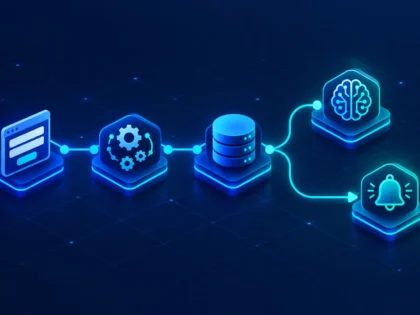
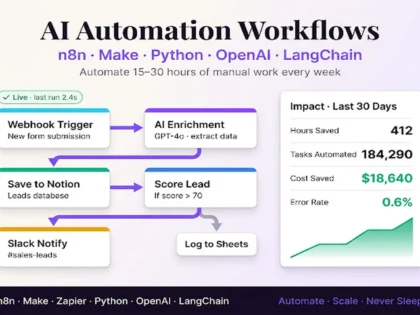
On Zinn Hub, experienced automation engineers build Zapier workflows, Make scenarios, n8n automations, RPA bots, AI-powered document processing pipelines and custom API integrations that eliminate manual work and run reliably at scale. These are specialists who understand both the automation platforms and the AI models that power intelligent steps within them — prompt engineering, structured output parsing, error handling and the production-grade reliability that separates a demo from a deployed solution. Pay with crypto on every listing and your first $500 is commission-free.
Why AI Automation Matters Now
Traditional automation moved structured data between systems — when a form is submitted, create a row in a spreadsheet, send a notification, update a CRM. This is valuable but limited to tasks with predictable, structured inputs and outputs. AI-powered automation breaks through that limitation. Large language models embedded in workflow steps can now read and understand unstructured documents, classify emails by intent rather than keywords, extract data from invoices regardless of format, generate personalised responses, summarise meeting transcripts, qualify leads from conversation context and make nuanced decisions that previously required a human in the loop. This means entire business processes that were only partially automatable — because they contained steps requiring judgment, language understanding or unstructured data — can now be automated end to end. The organisations adopting AI automation today are not just saving time on repetitive tasks — they are fundamentally restructuring how work gets done, reducing headcount on manual processing, accelerating response times from hours to seconds, and scaling operations without proportionally scaling teams.
AI Automation & Workflow Services on Zinn Hub
- Zapier AI Workflow Builds — Multi-step Zaps with AI-powered steps for text generation, classification, data extraction and summarisation. Conditional paths, filters, formatters, webhooks and connections across Zapier's 6000+ app integrations.
- Make (Integromat) Automation — Complex visual scenarios with branching logic, iterators, aggregators, error handlers, routers and webhooks. API module connections to any REST endpoint. Advanced data transformation and mapping between systems.
- n8n Workflow Development — Self-hosted or cloud-based automation with custom JavaScript nodes, AI agent nodes, LangChain integration, credential management and advanced error handling. Full data sovereignty for teams with privacy requirements.
- Robotic Process Automation (RPA) — UiPath, Automation Anywhere or Power Automate Desktop bots for automating desktop applications, web browsers, legacy systems and any software that lacks an API.
- AI Document Processing — Extracting structured data from invoices, contracts, receipts, forms and unstructured documents using OCR combined with LLMs for intelligent field mapping, validation and classification.
- AI Email & Communication Automation — Email classification, intent detection, response drafting, lead qualification, customer routing and sentiment analysis integrated with your CRM, helpdesk or support platform.
- Business Process Automation Consulting — Process mapping, automation opportunity identification, ROI calculation, platform selection and phased implementation roadmaps for organisations beginning their automation journey.
- Custom API Integrations — Building API bridges between systems without native connectors. Authentication handling, data transformation, pagination, rate limiting and error management for reliable system-to-system communication.
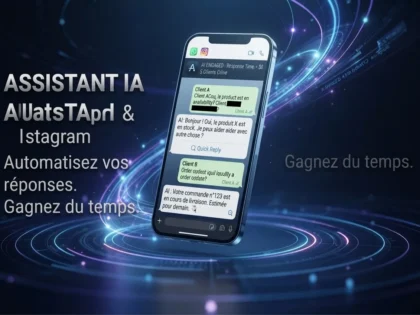
- AI Chatbot & Agent Workflows — Conversational agents that trigger backend automations, query databases, update CRMs, process orders and perform multi-step tasks based on natural language input from users or customers.
- Workflow Monitoring & Maintenance — Error alerting, execution dashboards, retry logic, dead letter queue management, performance optimisation and ongoing maintenance of production automation systems.
Automation Platforms vs Custom Development
Automation platforms like Zapier, Make and n8n provide a visual, low-code environment for connecting systems and building workflows without writing full applications. They are the right choice when you need to connect existing SaaS tools, when the logic follows identifiable trigger-action patterns, and when speed of deployment matters more than absolute customisation. Custom development — building automation in code with frameworks, cron jobs, message queues and databases — is the right choice when workflow logic is highly complex, when performance at massive scale is critical, or when you need capabilities beyond what any automation platform provides. Many production setups combine both — automation platforms handling the orchestration and integration layer, with custom code running specific processing steps where needed.
Related Services
AI automation connects with other development and AI services on Zinn Hub. For building the AI prompts and prompt systems that power intelligent workflow steps, browse prompt engineering services. For AI systems that search your documents and knowledge bases, see RAG and knowledge base development. For building automation interfaces without code, explore no-code and low-code development. For custom AI model development and fine-tuning beyond what pre-built integrations offer, browse the AI development parent category. For the infrastructure that runs self-hosted automation platforms like n8n, see Linux server administration. For deployment pipelines that push automation updates, browse DevOps engineering services.
Are you an experienced automation engineer? Start selling AI automation and workflow services on Zinn Hub and connect with businesses worldwide that need expert Zapier, Make, n8n and RPA solutions. Register as a Zinner for free and start listing today.
How to Hire an AI Automation & Workflow Specialist
Map Your Processes and Goals Identify the manual, repetitive processes you want to automate. Document the systems involved, the data that flows between them, the decision points that require human judgment, and the volume of transactions. Define success metrics — time saved, errors reduced, or speed improved.
Choose an Automation Specialist Browse AI automation and workflow services on Zinn Hub. Review portfolios for experience with your target platform — Zapier, Make, n8n or RPA tools. Check buyer reviews for reliability, documentation quality and post-delivery support. Message specialists to discuss your goals.
Provide System Access and Requirements Share access credentials or API keys for the systems being connected. Provide documentation on your current manual processes, sample data for testing, edge cases to handle, and any compliance or data privacy requirements that affect data flows.
Test, Deploy and Monitor Review completed automations with test data covering normal scenarios, edge cases and error conditions. Verify error handling, retry logic and alert configurations. Deploy to production with monitoring dashboards. Receive documented workflows with step-by-step explanations and maintenance procedures.
Frequently Asked Questions About AI Automation & Workflows
What AI automation and workflow services can I buy on Zinn Hub?+
Zinn Hub offers a full range of AI automation and workflow services from experienced automation engineers. You can buy Zapier AI workflow builds — multi-step Zaps connecting hundreds of apps with AI-powered data transformation, filtering, conditional branching and natural language processing steps using OpenAI or Claude integrations. Make (formerly Integromat) automation — complex visual workflow scenarios with branching logic, iterators, aggregators, error handling, webhooks and API module connections. n8n workflow development — self-hosted or cloud-based automation with custom JavaScript nodes, AI agent nodes, credential management, and advanced error handling for teams that need full control over their automation infrastructure. Robotic Process Automation — UiPath, Automation Anywhere or Power Automate Desktop bots that automate repetitive tasks in desktop applications, web browsers and legacy systems that lack APIs. AI-powered document processing — extracting structured data from invoices, contracts, receipts and forms using OCR combined with large language models for intelligent field mapping and validation. AI email and communication automation — automatic email classification, response drafting, lead qualification, customer inquiry routing and sentiment analysis integrated with your CRM or helpdesk. Business process automation consulting — mapping existing manual workflows, identifying automation opportunities, calculating ROI and building a phased implementation roadmap. Custom API integrations — connecting systems that do not have native connectors in Zapier or Make by building custom API bridges with authentication handling and data transformation. AI chatbot and agent workflows — building conversational agents that trigger backend automations, query databases, update CRMs and perform multi-step tasks based on user input. And workflow monitoring and maintenance — setting up error alerts, usage dashboards, retry logic and ongoing optimisation of existing automations.
How much do AI automation and workflow services cost on Zinn Hub?+
Costs depend on the complexity of the workflow, the number of systems connected and whether AI processing is involved. A simple Zapier or Make workflow connecting two to three apps with basic data mapping and filtering costs $100-300. A multi-step workflow with conditional branching, data transformation, error handling and five or more connected apps costs $300-800. An n8n workflow with custom JavaScript nodes, webhook triggers, AI processing steps and self-hosted deployment costs $400-1200. AI-powered document processing automation — extracting data from PDFs or images using OCR and LLM classification — costs $500-1500 depending on document types and accuracy requirements. RPA bot development for desktop application automation with UiPath or Power Automate Desktop costs $500-2000 depending on the number of processes and application complexity. A full business process automation audit with workflow mapping, ROI analysis and implementation roadmap costs $300-1000. Custom API integration development connecting two systems without native connectors costs $300-1000 per integration. AI chatbot workflows that trigger backend automations and handle multi-step conversations cost $500-2000. End-to-end automation of a complex business process spanning multiple departments and systems costs $1000-5000. Ongoing monthly maintenance and optimisation of existing automations typically ranges from $100-500 per month.
What is the difference between Zapier, Make and n8n?+
Zapier, Make and n8n are all workflow automation platforms but they differ significantly in approach, flexibility and pricing model. Zapier is the simplest to use — it connects over 6000 apps with a straightforward trigger-action model. Each workflow is called a Zap and follows a linear sequence of steps. Zapier is ideal for non-technical users who need simple automations quickly, but it becomes expensive at scale because pricing is based on the number of tasks executed per month, and complex branching logic is more limited than alternatives. Make uses a visual canvas where you build scenarios by connecting modules in a flowchart-style layout. It supports branching, loops, iterators, aggregators, error handlers and routers natively which makes it far more powerful for complex workflows. Make is more cost-effective than Zapier for high-volume automations because its pricing allows more operations per plan. The learning curve is steeper but the ceiling for complexity is much higher. n8n is an open-source workflow automation tool that can be self-hosted on your own infrastructure or used through their cloud offering. Self-hosting means no per-execution pricing — you pay only for the server resources. n8n supports custom JavaScript and Python code nodes, AI agent workflows with tool-calling, credential management across teams, and full control over data privacy since everything runs on your infrastructure. n8n is the choice for technical teams, developers and organisations with data residency requirements or high-volume workloads where per-task pricing becomes prohibitive. Choose Zapier for simplicity and speed. Choose Make for complex visual workflows at a reasonable price. Choose n8n for maximum flexibility, self-hosting and developer-friendly extensibility.
What is RPA and how is it different from API-based automation?+
RPA — Robotic Process Automation — uses software bots that interact with applications the same way a human does — clicking buttons, typing into fields, reading screen content, navigating menus and copying data between windows. API-based automation connects systems through their programming interfaces, exchanging data directly between backends without interacting with the user interface at all. The fundamental difference is that API automation is faster, more reliable and more efficient because it communicates directly with application backends, while RPA mimics human interaction with the frontend. API automation should always be the first choice when the applications involved have APIs available. RPA exists because many business applications — legacy enterprise software, government portals, desktop-only tools, mainframe terminals and some proprietary platforms — do not have APIs. When there is no API, RPA is the only option for automation. Common RPA tools include UiPath, Automation Anywhere, Microsoft Power Automate Desktop, and Blue Prism. RPA is also used for bridging between modern and legacy systems — for example, extracting data from a modern CRM via API and entering it into a legacy accounting system via RPA because the accounting system has no API. The ideal approach is a hybrid architecture — API-based automation wherever APIs are available, with RPA handling the gaps where legacy or closed systems require screen-level interaction.
How can AI improve my existing automations?+
AI transforms automations from rigid rule-based sequences into intelligent workflows that handle ambiguity, make decisions and process unstructured data. Traditional automations follow exact rules — if field X equals Y then do Z. AI-enhanced automations understand context, interpret natural language and classify data that does not fit neat categories. Document processing is one of the highest-impact applications — instead of brittle OCR templates that break when a document layout changes, AI models extract fields from invoices, contracts and forms regardless of format, identifying amounts, dates, parties and terms from any layout. Email and message classification uses AI to understand intent rather than relying on keyword matching — routing customer inquiries to the correct team, prioritising urgent requests, and drafting contextual responses. Data enrichment uses AI to clean, normalise and categorise incoming data — standardising company names, classifying products into categories, extracting structured information from free-text fields and deduplicating records. Decision automation uses AI to make judgment calls that previously required human review — approving expense reports under certain thresholds, qualifying sales leads based on conversation analysis, or flagging anomalous transactions for review. Content generation within workflows uses AI to create personalised emails, product descriptions, reports and summaries triggered by workflow events. The key is that AI handles the steps that were previously impossible to automate because they required human judgment, while traditional automation handles the structured, repeatable steps around them.
What business processes are best suited for AI automation?+
The best candidates for AI automation share common characteristics — they are repetitive, involve structured or semi-structured data, follow identifiable patterns, and currently consume significant human time relative to the complexity of the decisions involved. Lead management and sales automation — capturing leads from forms, emails and chat, enriching them with company data, scoring them using AI, routing to the right sales rep, triggering personalised email sequences and updating CRM records throughout the pipeline. Customer support workflows — classifying incoming tickets by issue type and urgency, suggesting responses from knowledge bases, auto-resolving common questions with AI, escalating complex issues with full context summaries, and collecting satisfaction data post-resolution. Invoice and expense processing — receiving invoices via email, extracting line items and amounts with AI, matching against purchase orders, routing for approval based on amount thresholds, and posting to accounting software. Content and marketing operations — generating first drafts of blog posts, social media content and email campaigns from briefs, scheduling across platforms, monitoring engagement metrics and triggering follow-up sequences based on performance. HR and recruitment processes — screening applications with AI scoring, scheduling interviews, sending status updates, collecting feedback and generating offer letters. Data entry and migration — extracting data from documents, spreadsheets and emails, transforming it into the correct format, validating it against business rules and loading it into target systems. Reporting and analytics — aggregating data from multiple sources on a schedule, generating formatted reports with AI-written summaries and distributing them to stakeholders.
Can I connect AI models like ChatGPT or Claude to my automations?+
Yes — all major automation platforms support direct integration with AI models. Zapier has native OpenAI and AI-related actions that let you add GPT or Claude steps to any Zap for text generation, classification, summarisation, data extraction and conversation. Make has HTTP and OpenAI modules that connect to the OpenAI, Anthropic and other AI provider APIs, allowing you to send prompts, receive structured responses and use them in subsequent workflow steps. n8n has dedicated AI agent nodes, LangChain integration and HTTP request nodes for connecting to any AI API with full control over prompts, parameters and response parsing. Beyond these platform integrations, custom API connections can call any AI model endpoint — OpenAI GPT-4, Anthropic Claude, Google Gemini, Mistral, open-source models running on your own infrastructure, or specialised models for tasks like image recognition, speech-to-text or translation. The key to effective AI integration in workflows is prompt engineering — structuring your prompts to return consistent, parseable outputs that downstream automation steps can process reliably. This means using system prompts that enforce JSON output, defining clear output schemas, implementing validation steps after AI responses, and building retry logic for cases where the model returns unexpected formats. Specialists on Zinn Hub build these AI-integrated automations with production-grade error handling so they run reliably at scale.
How do I automate workflows across systems that do not have native integrations?+
When two systems need to exchange data but have no pre-built connector in Zapier, Make or n8n, there are several approaches depending on the technical capabilities of each system. If both systems have REST APIs — which most modern SaaS applications do — a custom API integration uses HTTP request modules in your automation platform to call each system directly. This involves authenticating with API keys or OAuth, constructing the correct request payloads, handling pagination for large data sets, parsing the response data and mapping fields between systems. If one system supports webhooks — sending HTTP requests when events occur — you can trigger workflows in real time by configuring the webhook to call your automation platform endpoint. If a system has no API but can send email notifications, you can use email parsing as a trigger — receiving the notification email, extracting structured data from the email body or attachments with AI, and passing it into the workflow. If the system has a database backend you can access, direct database queries can read and write data — though this bypasses the application layer and requires careful handling of data integrity and business logic. For systems with absolutely no API, webhook, email or database access, RPA bots interact with the user interface to extract and input data. And for file-based integrations, workflows can monitor shared folders, SFTP servers or cloud storage for new files, process them and distribute the results. Specialists on Zinn Hub evaluate your systems and recommend the most reliable integration approach for each connection.
What should I consider when scaling automations for a growing business?+
Scaling automations requires planning across several dimensions that are easy to overlook when building initial workflows. Execution volume and platform costs — Zapier and Make charge based on the number of operations or tasks executed, so a workflow that costs $20 per month at current volume might cost $500 at ten times the volume. Model your expected growth and calculate costs at scale before choosing a platform. Consider n8n self-hosted if high volume makes per-task pricing prohibitive. Error handling and monitoring — small-scale automations can be monitored manually but at scale you need structured error handling with retry logic, dead letter queues for failed executions, alerting to Slack or email when workflows fail, and dashboards showing execution success rates and processing times. Data consistency — when multiple automations write to the same systems, race conditions and duplicate processing become real risks. Build idempotency into your workflows so that processing the same event twice does not create duplicate records. Use unique identifiers and deduplication checks at every step. Credential and access management — as the number of automations and team members grows, centralise credential management and use service accounts rather than personal accounts for API connections. Version control and documentation — document every workflow with its purpose, trigger conditions, connected systems, data flow and error handling. Use naming conventions and folder structures that make it easy to find and maintain workflows as the number grows. Testing environments — build staging versions of critical workflows that connect to sandbox or test instances of your applications so you can test changes without affecting production data.
How do I choose an AI automation specialist on Zinn Hub?+
When choosing an AI automation specialist on Zinn Hub, start with platform expertise — Zapier, Make and n8n are fundamentally different tools and deep expertise in one does not automatically mean proficiency in the others. Check that the specialist has strong experience with the specific platform you want to use or can advise you on which platform fits your requirements. Review their portfolio for automation projects similar to yours in complexity and industry. If you need AI integration, verify they have experience with the specific AI providers and models relevant to your use case — building reliable AI steps in workflows requires prompt engineering skills and understanding of model capabilities and limitations. Read buyer reviews for feedback on reliability, documentation quality, error handling robustness and post-delivery support. Ask about their approach to error handling — production automations need retry logic, failure alerts, logging and graceful degradation, not just a workflow that works in ideal conditions. Ask what documentation they provide — you should receive the complete workflow configuration, a plain-language explanation of each step and its purpose, error handling procedures, and instructions for common modifications. For complex projects, ask about their testing process — do they test with edge cases, error scenarios and realistic data volumes before handover? Confirm they provide a handover period where they monitor the automation in production and resolve any issues. Message specialists before ordering to discuss your specific systems, data volumes and automation goals.

 ✓🆕 New Seller✨ New
 ✓
✓ ✓
✓ ✓
✓ ✓
✓ ✓
✓ ✓
✓ ✓🆕 New Seller✨ New
 ✓🆕 New Seller✨ New
 ✓🆕 New Seller✨ New