Hire RAG & Knowledge Base Specialists
Your organisation's knowledge is locked inside documents, wikis, databases and file systems that AI models cannot access by default — and the only way to build AI systems that answer questions accurately from your specific data is retrieval augmented generation. RAG is the architecture that turns a general-purpose AI model into an expert on your business by connecting it to your documents at query time, giving it the context it needs to provide grounded, accurate, citable answers instead of generic responses or hallucinated information.
On Zinn Hub, experienced AI engineers build custom RAG pipelines, vector database systems, document ingestion workflows, knowledge base chatbots, hybrid search implementations and evaluation frameworks that make your organisational knowledge searchable through natural language. These are specialists who understand the full RAG stack — document parsing, chunking strategies, embedding models, vector databases, retrieval algorithms, prompt engineering for grounded generation, and the evaluation methodology that separates reliable systems from unreliable ones. Pay with crypto on every listing and your first $500 is commission-free.
Why RAG Matters for Your Business
Every organisation has a knowledge problem — critical information is scattered across documentation, policies, help articles, internal wikis, Slack threads, email archives and individual expertise. Employees spend hours searching for answers that exist somewhere in the organisation but are hard to find. Customers wait for support responses while agents search through knowledge bases manually. New team members take months to ramp up because institutional knowledge is undocumented or buried. RAG solves this by creating an AI layer over your existing knowledge that anyone can query in natural language. Instead of searching through dozens of documents and hoping the right keywords match, users ask questions naturally and receive accurate answers with citations pointing to the source documents. The AI does not guess — it retrieves the relevant passages from your data and generates answers grounded in that evidence. This is fundamentally different from giving employees access to ChatGPT, which knows nothing about your specific business. A RAG system trained on your documentation becomes an always-available expert on your products, processes, policies and procedures — one that answers consistently, never forgets, and scales to serve every person in your organisation simultaneously.
RAG & Knowledge Base Services on Zinn Hub
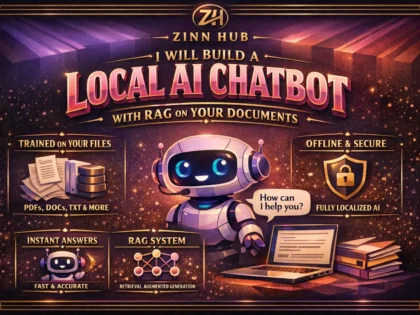
- Custom RAG Pipeline Development — End-to-end retrieval augmented generation systems connecting your documents to AI models. Document ingestion, chunking, embedding, vector storage, retrieval, prompt engineering and answer generation with citation support.
- Vector Database Setup & Configuration — Pinecone, Weaviate, Qdrant, Milvus, ChromaDB or pgvector installation, schema design, indexing strategies, metadata filtering, namespace configuration and query performance optimisation.
- Document Ingestion Pipelines — Automated processing of PDFs, Word documents, spreadsheets, web pages, Confluence, Notion, SharePoint, Google Drive and other sources into chunked, embedded, indexed content with change detection and incremental re-indexing.
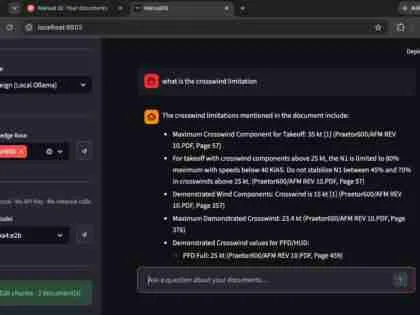
- AI-Powered Document Q&A Systems — Chat or search interfaces where users ask natural language questions and receive accurate answers sourced from your documentation with citations, confidence scores and links to source material.
- Knowledge Base Chatbots — Customer-facing or internal AI assistants that answer questions from your knowledge base, product docs, help centre, SOPs or policy documents with branded interfaces, conversation history and feedback collection.
- Hybrid Search Implementation — Combining vector similarity search with BM25 keyword search for retrieval that handles both semantic meaning and exact terminology, technical jargon and proper nouns that pure vector search may miss.
- Chunking Strategy Optimisation — Systematic testing of fixed-size, semantic, recursive and parent-child chunking approaches against your content types with quantified accuracy comparisons to determine the optimal strategy.
- Embedding Model Selection & Fine-Tuning — Benchmarking OpenAI, Cohere, Voyage, BGE, E5 and other embedding models against your data. Optional fine-tuning on your domain vocabulary for improved retrieval relevance.
- Multi-Modal RAG Systems — Retrieval over images, diagrams, charts and tables in addition to text, enabling AI to answer questions about visual content embedded in your documents.
- RAG Evaluation & Monitoring — Automated evaluation pipelines measuring retrieval accuracy, answer correctness, hallucination rates and response quality. Production monitoring dashboards with accuracy tracking, latency metrics and usage analytics.
RAG Architecture Layers
A production RAG system involves multiple technical layers that each affect answer quality. The ingestion layer handles document parsing, cleaning and chunking. The embedding layer converts text chunks into vector representations. The storage layer — the vector database — indexes and serves these vectors for fast similarity search. The retrieval layer combines search strategies, applies filters and ranks results. The generation layer uses prompt engineering to ground the AI model's response in retrieved context. And the evaluation layer measures end-to-end quality. Weakness at any layer degrades the entire system, which is why RAG requires specialists who understand the full stack, not just one component.
Related Services
RAG and knowledge base development connects with other AI and development services on Zinn Hub. For the prompts that power the generation layer of your RAG system, browse prompt engineering services. For automated workflows that trigger RAG queries and process the results, see AI automation and workflow services. For building RAG-powered interfaces without code, explore no-code and low-code development. For custom AI model training and fine-tuning that complements RAG, browse the AI development parent category. For the server infrastructure that hosts self-managed vector databases and RAG pipelines, see Linux server administration. For deployment pipelines and infrastructure-as-code for RAG systems, browse DevOps engineering services.
Are you an experienced RAG engineer? Start selling RAG and knowledge base services on Zinn Hub and connect with businesses worldwide that need custom retrieval augmented generation systems, vector database expertise and AI-powered document search. Register as a Zinner for free and start listing today.
How to Hire a RAG & Knowledge Base Specialist
Define Your Data Sources and Use Case Identify the documents and data your AI system needs to search — PDFs, help articles, wikis, databases, web pages or internal documentation. Define how users will interact with the system and specify accuracy requirements and expected question types.
Choose a RAG Specialist Browse RAG and knowledge base services on Zinn Hub. Review portfolios for experience with your document types, data volume and deployment environment. Check buyer reviews for answer accuracy and system reliability. Message specialists to discuss your requirements.
Provide Documents and Access Share your document collection or provide API access to your content platforms. Provide sample questions, expected answers for evaluation, and any domain-specific terminology. Specify access control requirements if different users should see different content.
Evaluate, Deploy and Monitor Review evaluation results showing retrieval accuracy, answer correctness and hallucination rates. Test with real users and edge cases. Deploy with monitoring dashboards tracking accuracy, usage and performance. Receive full architecture documentation and maintenance procedures.
Frequently Asked Questions About RAG & Knowledge Bases
What RAG and knowledge base services can I buy on Zinn Hub?+
Zinn Hub offers a full range of RAG and knowledge base development services from experienced AI engineers. You can buy custom RAG pipeline development — end-to-end retrieval augmented generation systems that connect your documents, databases and knowledge sources to AI models so they answer questions accurately using your specific data. Vector database setup and configuration — Pinecone, Weaviate, Qdrant, Milvus, ChromaDB or pgvector installation, schema design, indexing strategies, metadata filtering and query optimisation. Document ingestion pipelines — processing PDFs, Word documents, spreadsheets, web pages, Confluence wikis, Notion databases, SharePoint libraries and other sources into chunked, embedded, indexed content ready for retrieval. AI-powered document Q&A systems — chatbot or search interfaces where users ask natural language questions and receive accurate answers sourced directly from your documentation with citations. Knowledge base chatbots — customer-facing or internal AI assistants that answer questions from your knowledge base, product documentation, help centre articles, SOPs or policy documents. Hybrid search implementation — combining vector similarity search with traditional keyword search using BM25 for retrieval that handles both semantic meaning and exact terminology. Chunking strategy optimisation — testing and implementing the right document splitting approach for your content type, balancing chunk size, overlap and metadata preservation for optimal retrieval accuracy. Embedding model selection and fine-tuning — choosing the right embedding model for your domain and content type, benchmarking alternatives, and optionally fine-tuning embeddings on your data for improved retrieval relevance. Multi-modal RAG systems — retrieval over images, diagrams, tables and charts in addition to text, enabling AI to answer questions about visual content in your documents. And RAG evaluation and monitoring — building evaluation pipelines that measure retrieval accuracy, answer correctness, hallucination rates and response quality with automated scoring.
How much do RAG and knowledge base services cost on Zinn Hub?+
Costs depend on the complexity of the RAG architecture, the volume and diversity of source documents, and the required accuracy level. A basic RAG system ingesting a single document collection of up to 500 pages with a simple chat interface costs $500-1500. A production RAG pipeline with multiple document sources, hybrid search, metadata filtering, citation generation and a polished chat UI costs $1500-5000. Vector database setup and configuration with schema design, indexing optimisation and query tuning costs $300-1000. A document ingestion pipeline processing content from Confluence, Notion, SharePoint or other platforms with automated syncing costs $500-2000. A customer-facing knowledge base chatbot with branded interface, conversation history, feedback collection and analytics costs $1000-4000. Hybrid search implementation combining vector and keyword search with relevance tuning costs $500-1500. Chunking strategy optimisation with systematic testing across multiple approaches and quantified accuracy comparisons costs $300-1000. Embedding model benchmarking and selection for your specific content domain costs $300-800. A comprehensive enterprise RAG system with multiple data sources, role-based access controls, audit logging, evaluation pipelines and ongoing monitoring costs $3000-10000. Ongoing monthly maintenance including re-indexing, accuracy monitoring, prompt updates and source syncing typically ranges from $200-800 per month.
What is RAG and how does it work?+
RAG — Retrieval Augmented Generation — is an architecture that connects AI language models to your specific data so they can answer questions accurately using information from your documents, databases and knowledge sources rather than relying solely on their training data. Without RAG, AI models can only respond based on what they learned during training — they cannot access your internal documentation, product specifications, company policies, customer data or any information that was not in their training set. RAG solves this by adding a retrieval step before generation. The process works in three stages. First, your documents are processed during an ingestion phase — they are split into chunks, each chunk is converted into a numerical representation called an embedding using an embedding model, and these embeddings are stored in a vector database along with the original text and metadata. Second, when a user asks a question, the question is also converted into an embedding and the vector database is searched for the chunks whose embeddings are most similar to the question embedding — this is semantic search, finding content by meaning rather than keyword matching. Third, the most relevant chunks are retrieved and passed to the AI model as context alongside the user question, and the model generates an answer grounded in that retrieved content. The result is an AI system that answers questions accurately using your specific data, can cite its sources, stays current as your documents are updated, and does not hallucinate information because it is generating from retrieved evidence rather than memory.
What is a vector database and why do I need one for RAG?+
A vector database is a specialised database designed to store and search high-dimensional numerical vectors — the mathematical representations of text, images or other content created by embedding models. Traditional databases search by exact matches or keyword patterns. Vector databases search by similarity — given a query vector, they find the stored vectors that are closest in meaning, even if they use completely different words. You need a vector database for RAG because semantic search is the core mechanism that makes retrieval work. When a user asks a question about your documentation, the system needs to find the most relevant passages — not by matching keywords, but by understanding meaning. A question about return policies needs to find your returns documentation even if the exact word "return" does not appear in the query. Vector databases make this similarity search fast and scalable, even across millions of document chunks. Popular vector databases include Pinecone which is a fully managed cloud service with simple API access and automatic scaling. Weaviate which is open-source with built-in hybrid search combining vector and keyword retrieval. Qdrant which is open-source with strong filtering capabilities and efficient memory usage. ChromaDB which is lightweight and developer-friendly, ideal for prototyping and smaller deployments. Milvus which is open-source and designed for large-scale enterprise deployments. And pgvector which is a PostgreSQL extension that adds vector search to your existing PostgreSQL database, avoiding the need for a separate system. The choice depends on scale, infrastructure preferences, whether you want managed or self-hosted, and whether you need features like hybrid search, multi-tenancy or advanced filtering.
What is the difference between RAG and fine-tuning an AI model?+
RAG and fine-tuning solve different problems and are often confused. Fine-tuning modifies the AI model itself by training it on additional data — the model permanently learns new patterns, writing styles or domain knowledge. RAG does not modify the model — it provides relevant context at query time from an external knowledge base, and the model generates answers grounded in that context. Fine-tuning is best for teaching the model a specific writing style, tone or format. For embedding domain-specific terminology and reasoning patterns into the model. For reducing prompt length by encoding common instructions into the model weights. And for tasks where the required knowledge is stable and does not change frequently. RAG is best for answering questions from a large, evolving document collection. For tasks where the source information changes frequently and needs to stay current. For providing cited, verifiable answers traceable to specific source documents. For working with proprietary or sensitive data that should not be included in model training. And for tasks where accuracy and groundedness matter more than stylistic adaptation. In practice, RAG is the right choice for most business knowledge base and document Q&A applications because the information changes over time, users need to verify answers against sources, and the volume of content is too large to fine-tune into a model economically. The two approaches can be combined — a fine-tuned model that also uses RAG for retrieval — but most implementations start with RAG alone because it delivers immediate value without the cost and complexity of model training.
How do I handle different document types in a RAG system?+
Real-world knowledge bases contain diverse document types that each require different ingestion approaches. PDFs are the most common and most challenging — they can contain text, tables, images, headers, footers, multi-column layouts and scanned pages. Text-based PDFs are parsed with libraries like PyMuPDF, pdfplumber or Unstructured, with special handling needed for tables and multi-column layouts. Scanned PDFs require OCR with tools like Tesseract or cloud OCR services before the text can be chunked and embedded. Word documents are parsed with python-docx or similar libraries, preserving heading structure for intelligent chunking that respects document hierarchy. Spreadsheets require converting rows or sections into natural language descriptions or structured text representations that embedding models can process meaningfully. Web pages are scraped and cleaned to extract the main content while removing navigation, ads and boilerplate. Confluence, Notion and SharePoint content is accessed through their respective APIs, with page structure and metadata preserved. Code repositories require specialised chunking that respects function and class boundaries. Markdown and plain text files are the simplest to process but still benefit from structure-aware chunking. The key principle is that each document type needs a tailored parsing and chunking strategy — a pipeline that works well for clean text documents will produce poor results on complex PDFs with tables and diagrams. A robust RAG system includes document type detection, specialised parsers for each type, and quality checks that flag parsing failures before corrupted content enters the index.
What is chunking and why does chunk size matter?+
Chunking is the process of splitting your documents into smaller pieces that are individually embedded and stored in the vector database. When a user asks a question, the system retrieves the most relevant chunks — not entire documents — so chunk size directly affects both retrieval accuracy and answer quality. If chunks are too large, they contain too much information and the relevant sentences are diluted by surrounding content. The embedding represents the average meaning of the entire chunk, so a large chunk about multiple topics will not match well against a specific question about one of those topics. Retrieved large chunks also consume more of the AI model's context window, leaving less room for multiple sources and the generation prompt. If chunks are too small, they lose context — a single sentence may not contain enough information for the model to generate a useful answer, and important context from surrounding sentences is lost. Very small chunks also increase the number of vectors in the database and the number of retrieval results needed to cover a topic. The optimal chunk size depends on your content type and question patterns. For factual documentation like help articles and product guides, chunks of 200-500 tokens work well because information tends to be concentrated. For narrative content like reports and analyses, larger chunks of 500-1000 tokens preserve the reasoning flow. Overlap between chunks — typically 50-100 tokens of shared content at chunk boundaries — ensures that information split across chunk borders is still retrievable. More advanced approaches include semantic chunking that splits at natural topic boundaries, recursive chunking that creates hierarchical representations, and parent-child chunking where small chunks are retrieved but larger parent chunks are passed to the model for more context.
How do I reduce hallucinations in a RAG system?+
Hallucination in RAG systems occurs when the AI model generates information that is not present in the retrieved context — either fabricating facts, misrepresenting source content, or blending retrieved information with its own training knowledge in misleading ways. Several techniques reduce hallucination systematically. Improve retrieval accuracy first — the most common cause of hallucination is not the model but poor retrieval. If the correct source documents are not retrieved, the model either admits it cannot answer, which is the desired behaviour, or generates an answer from its training data, which is hallucination. Better chunking, hybrid search, metadata filtering and embedding model selection all improve retrieval accuracy. Use explicit grounding instructions in your system prompt — instruct the model to answer only from the provided context, to say it does not know when the context does not contain the answer, and to never supplement with information from its training data. Include citation requirements — instruct the model to cite the specific source and section for every claim, which forces it to ground each statement in retrieved content and makes fabricated claims obvious. Implement answer verification — use a second AI call to check whether the generated answer is actually supported by the retrieved context, flagging or filtering responses where claims cannot be traced to source material. Add confidence scoring — prompt the model to rate its confidence that the answer is fully supported by the provided context. Use retrieval score thresholds — if the similarity scores of retrieved chunks are below a threshold, return a response indicating insufficient information rather than attempting an answer from weak context. And build evaluation pipelines that continuously measure hallucination rates across test questions with known answers.
Can I build a RAG system that stays current as my documents change?+
Yes — a production RAG system needs an automated pipeline that detects document changes and updates the vector index accordingly. This is one of the critical differences between a demo RAG system and a production one. The approach depends on your document sources. For documents stored in cloud platforms like Confluence, Notion, SharePoint or Google Drive, the ingestion pipeline uses the platform API to detect new, modified and deleted pages on a schedule — typically hourly or daily depending on how frequently your content changes. New pages are chunked, embedded and added to the vector index. Modified pages have their old chunks deleted and new chunks inserted. Deleted pages have their chunks removed from the index. For file-based document stores, the pipeline monitors directories for file changes using checksums or modification timestamps. For web content, the pipeline re-crawls source URLs on a schedule and compares content hashes to detect changes. The key architectural decisions are the sync frequency — how often the pipeline checks for changes — and the granularity of change detection — whether you re-process entire documents or only changed sections. Incremental processing that only re-embeds changed content is more efficient but more complex to implement than full re-ingestion. You also need to handle metadata updates — when a document title, author or category changes, the associated chunk metadata in the vector database needs to be updated. Specialists on Zinn Hub build these automated sync pipelines as part of production RAG deployments so your knowledge base stays current without manual intervention.
How do I choose a RAG and knowledge base specialist on Zinn Hub?+
When choosing a RAG and knowledge base specialist on Zinn Hub, look for demonstrated experience building end-to-end RAG systems — not just prompt engineering or chatbot interfaces. RAG involves multiple technical domains including document processing, embedding models, vector databases, retrieval algorithms, prompt engineering and evaluation, and the specialist needs depth across all of them. Review their portfolio for RAG projects handling document types and volumes similar to yours. If you have complex PDFs with tables and images, confirm they have experience with those specific parsing challenges. If you need multi-source ingestion from Confluence, SharePoint or databases, check for experience with those specific integrations. Read buyer reviews for feedback on answer accuracy, retrieval quality, system reliability and documentation. Ask about their chunking and embedding approach — a good specialist will discuss trade-offs between chunking strategies and recommend an approach based on your content type rather than using a one-size-fits-all method. Ask how they measure quality — professional RAG engineers build evaluation sets with known questions and expected answers and measure retrieval accuracy, answer correctness and hallucination rates quantitatively. Ask about their approach to hallucination prevention — grounding instructions, citation generation, confidence scoring and verification steps. Ask what their system includes for ongoing maintenance — automated re-indexing, monitoring dashboards, accuracy tracking and alert configurations. For enterprise deployments, confirm experience with access controls, multi-tenancy, audit logging and compliance requirements. Message specialists before ordering to discuss your document sources, volume, question types and accuracy requirements.