


Upwork Alternative for Chatbot Development
Upwork runs on proposals: a developer buys Connects to bid on your brief, a service fee comes out of what they earn, and the money waits out a security period before it can leave the platform. Zinn Hub® is listing-led — you order a published chatbot Zinn® with the scope already written down, Zinners pay 0% commission on their first $500, and their share is released at checkout.
Browse Verified Zinners →Why Look for an Upwork Alternative for Chatbot Development?
Chatbot work sits in an odd spot. It is technical enough that a buyer cannot always judge a CV, yet far more knowable in advance than most software: the channels, the intents, the handover rules and the systems it must reach are usually settled before anyone writes a line. Upwork is a serious platform for it — hourly contracts with time tracking, milestones held in escrow, clients arriving with a brief and a budget. The question here is narrower: whether a proposal-led model fits a build whose scope can be written down first.
Three frictions come up repeatedly, on both sides of the table. A buyer who posts "chatbot developer needed" gets a wide field, then reads proposals rather than comparing published scopes. Tracked hourly time is an awkward measure for work that is mostly intent design, flow decisions and integration testing, where the better developer is frequently the faster one. And on the developer's side, Connects are spent before a single dollar has come in, while earnings wait out a security period before withdrawal.
Zinn Hub answers those points with a different model rather than a better version of the same one. There are no proposal credits, and buyers order a published Zinn directly. Zinners pay 0% commission on their first $500, their share is released at checkout, and buyers pay no platform fee. Browse programming and tech, digital marketing, writing and translation or graphics and design to see how conversational-AI Zinners scope their work.
0%
Commission on the first $500
Checkout
When the Zinner's share is released
100+
Payment methods
46
Site languages
4.9
Average rating from 39,000+ verified-purchase reviews
Five Frictions Chatbot Buyers and Builders Describe
These are differences in model, not accusations. Each is a design decision that suits some projects and not others.
Paying to Quote
Connects are spent on proposals, not on won work. A specialist who turns down three ill-fitting briefs has still paid for the privilege of reading them.
Proposals Instead of Scopes
A job post produces pitches written to persuade. A published listing produces scopes written to be delivered, which is far easier to compare like for like.
Hours as the Unit
Tracked time measures effort, not outcome. On an integration a seasoned developer has done twenty times before, paying by the hour quietly penalises experience.
Earned but Not Available
A security period sits between an approved milestone and a withdrawal. For a one-person studio paying for model usage upfront, money that cannot move is a real constraint.
Badges Reward Tenure
Badges are earned through sustained activity on one platform. Fair to long-serving members, but a conversational-AI engineer opening a new profile starts at the bottom regardless.
Is Upwork Good for Chatbot Projects?
Yes, for a particular shape of project. If you are staffing a long-running conversational AI programme, embedding a developer alongside an in-house team, or running continuous retraining and analytics work that a finance department wants documented as an hourly contract, then Upwork's contracts, time tracking and dispute process do exactly what they were designed to do.
It fits less well when the build is well-bounded and repeatable — a support bot on two channels, a lead-qualification flow, a knowledge-base assistant over documentation you already have — because then you are paying the overhead of an open bidding process to buy something that could simply have been listed with a price. That is where a second platform earns its place. Read the broader Upwork alternative overview or the Zinn Hub vs Upwork comparison.
Zinn Hub vs Upwork for Chatbot Development — the Model Difference
Two marketplaces, two designs. Neither is universally better; they suit different projects.
| How it works | Zinn Hub | Upwork |
|---|---|---|
| Finding a developer | ✓ Browse published Zinns and order one | ~ Post a job, read proposals bid using Connects |
| Developer commission | ✓ 0% on the first $500 in sales | ~ Service fee on earnings |
| When the Zinner is paid | ✓ Their share is released at checkout | ~ After a security period |
| Buyer platform fee | ✓ None — listed price is the price | ~ Client-side charges apply |
| Zinnector®'s protection | ✓ Escrow until the order completes, refunds to the Zinn Wallet | ✓ Escrow on fixed-price milestones, plus disputes |
| Credibility signal | ✓ ID- and skill-verified Zinners | ✓ Badge tiers built on tenure |
| Ongoing work with tracked hours | ~ Fixed-scope Zinns and briefs | ✓ Hourly contracts, time tracking |
| Existing client traffic | ~ Growing marketplace | ✓ Large established client base |
How a Chatbot Project Starts on Zinn Hub
The route is deliberately short, because nothing is spent on either side before the first order is placed.
Compare Scopes
Read published chatbot Zinns side by side. Deliverables, revisions and turnaround are written down before you buy.
Order or Brief
Order the Zinn outright, or post a project brief for free and let verified Zinners reply to it.
Build in Escrow
Your payment is held until the order completes, with messages, test links and files in one thread.
Complete and Pay Out
The Zinner's share is released at checkout — at 0% commission until they have passed $500 in sales.
Scoping a Chatbot Build That Does Not Drift
Write the scope before the shortlist
The largest hidden cost on a chatbot project is a definition of "done" agreed after the work has started. Decide first how many intents the bot must handle, what it should do when it is unsure, and who signs off the tone. Once those three are settled you can compare published scopes on identical terms, instead of normalising five differently structured proposals.
Name the channels and the systems
"A chatbot for our website" and "a chatbot for our website, WhatsApp and a helpdesk handover" are different projects with different budgets. Put the channels, the CRM or ticketing system it must reach, and any authentication requirement into the brief. Zinners can then quote against something real, and anyone who cannot integrate with your stack will say so before you pay.
Ask for the handover, not just the bot
A conversational assistant is only as useful as the team that can maintain it. Ask, as a listed deliverable, for the intents or knowledge source in an editable form, a note on how to add a new answer, and the fallback and escalation rules written out. That is what separates a chatbot you own from one you effectively rent from whoever built it.
Price the whole payment chain
Everything is quoted and settled in US dollars, buyers pay no platform fee, and the Zinner's share is released at checkout rather than after a security period, so the only wait left is whatever a payout method takes to reach a bank account. Our pricing page sets out how orders are charged, and the refund policy covers undelivered work.
Who Should Choose Which
An honest split. Most chatbot buyers and builders will recognise themselves in one column more than the other.
✅ Zinn Hub suits you if
- You would rather compare written scopes than read proposals
- Your build is bounded — a support bot, a lead flow, a knowledge assistant
- You want a fixed price rather than tracked hours on integration work
- As a developer, you would rather publish a service than pay to submit bids
- Early earnings matter — 0% commission on the first $500
- Your clients want to pay by card, PayPal or cryptocurrency
💡 Upwork still suits you if
- The work is retainer-shaped or runs for months
- You need an hourly contract with tracked time to get it approved
- You rely on its large established client base
- You have already earned a badge tier worth protecting
- You are content with the fees and payout timing as they stand
Popular Chatbot Services on Zinn Hub
The pieces of conversational-AI work Zinners are most often commissioned to deliver.
- Chatbot development — website assistants, support bots and lead-qualification flows.
- AI chatbot builds — assistants answering over your own documentation and knowledge base.
- Messaging channel bots — WhatsApp, Messenger, Telegram and in-app widgets.
- Programming and tech — API work, CRM and helpdesk integration, and deployment.
- Writing and translation — conversation scripts, tone guides and multilingual intents.
- Digital marketing — conversion flows, campaign bots and follow-up analytics.
- Micro Zinns — fixed-price pieces from $5 to $20, useful for a first test.
Related Platform Comparisons
Weighing up more than one option? These pages cover the same ground from a different angle.
Upwork Alternative
The model difference across every category. Read the overview →
Zinn Hub vs Upwork
A straight feature-by-feature comparison. Read the comparison →
All Platform Alternatives
Every alternative page, by platform and by topic. Browse alternatives →
Browse Digital Services
Search the marketplace directly for the work you need done.
Hire a Chatbot Developer Without Bidding
Compare published scopes priced in USD, pay no buyer platform fee, and keep your payment in escrow until the order completes. Building bots for a living? List your services and take your share at checkout, at 0% commission on your first $500.
Become a Zinner →Top Zinns ⚡
-
 do ai website, or ai mobile app development, ai software, ai chatbot development Verified Trusted Zinner Hot Zinner Zinner Level 4Develop a simple AI-powered mobile App or website with basic functionalities & user authentication | Visionary Full Stack web and Expert Vetted…
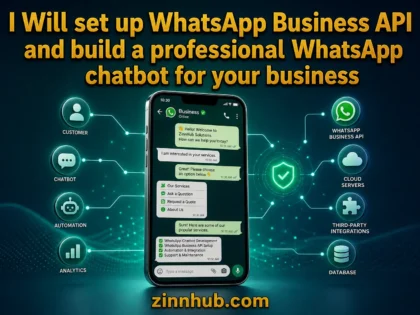
 - I Will set up WhatsApp Business API and build a professional WhatsApp chatbot for your business Verified Zinner Level 1Get a fully configured WhatsApp Business API and a custom chatbot built for your business — covering customer support, FAQ automation, lead…
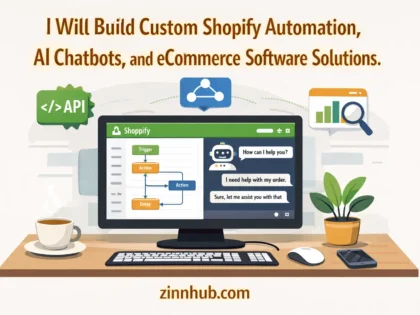
- I Will Build Custom Shopify Automation, AI Chatbots, and eCommerce Software Verified Zinner Level 1Stop juggling disconnected tools and manual processes. I build custom Shopify apps, AI chatbots, automation workflows, and analytics dashboards — backed by…
- do custom ai website, mvp, saas, chatbot development as full stack web developer Verified Trusted Zinner Hot Zinner Zinner Level 4A single, visually appealing page with up to five sections, crafted for small businesses. | Certified, Experienced, Reliable Your Partner in Web…
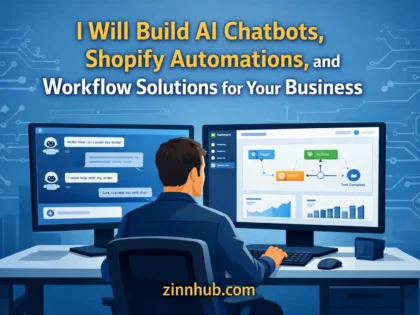
- I Will Build AI Chatbots, Shopify Automations, and Workflow Solutions for Your Business Verified Zinner Level 1Weekly subscription delivering AI chatbots, Shopify automations, and workflow solutions — practical, scalable builds from a Software Engineer with 10+ years of…
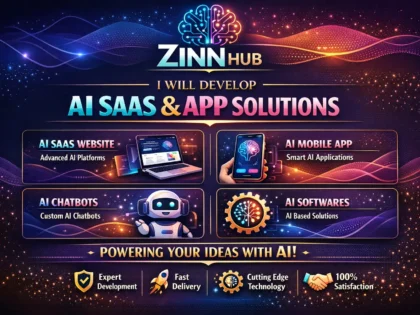
- develop ai saas website, ai mobile app, chatbot development and ai softwares Verified Trusted Zinner Hot Zinner Zinner Level 4Build basic AI website with design and AI Integrations | I will innovate your digital footprint and career path!
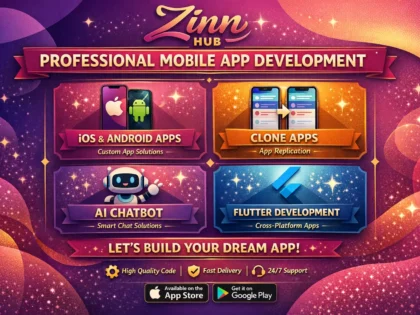
- do mobile app development ios android app clone app ai chatbot flutter developer Verified Trusted Zinner Hot Zinner Zinner Level 4A clean, 1-screen mobile app designed and developed to match your core idea and branding. | Empowering Your Business Through Technology
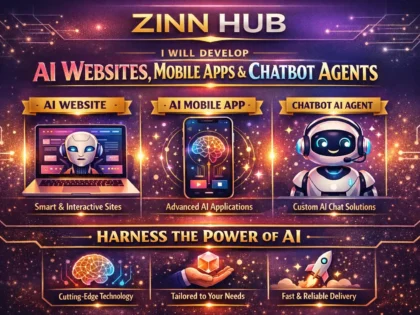
- do ai website, ai mobile app, chatbot ai agent development Verified Trusted Zinner Hot Zinner Zinner Level 4Basic frontend applicatoin development | AI And Software Agency Owner Turning Ideas Into Scalable MVPs
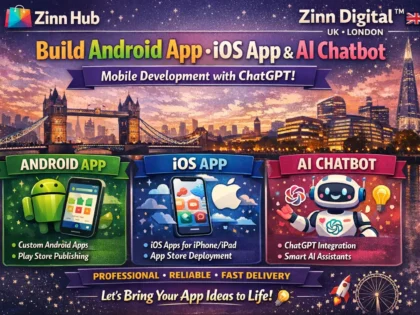
- Build Android App, iOS App, AI Chatbot for Mobile Development with ChatGPT Verified Trusted Zinner Hot Zinner Zinner Level 4lightweight static app for iOS & Android, perfect for showcasing information or simple business need | AI Powered Web and Mobile App…
- AI mobile app development, AI chatbot, AI website, AI SaaS by Zinn Digital® Verified Trusted Zinner Hot Zinner Zinner Level 4AI-Powered Mobile App with Essential Features and Personal Assistant for iOS & Android | Empowering ideas through technology
- ai mobile app development ai chatbot ios android app flutter lovable developer Verified Trusted Zinner Hot Zinner Zinner Level 4Basic Mobile App with 10 Screen following client's provided UX/UI design, no API | Award Winning Developer From Design to Deployment Your…
- mobile app development ai app flutter developer ai chatbot ios app creation Verified Trusted Zinner Hot Zinner Zinner Level 4Basic Mobile App with 3-5 Screen following clients provided UX/UI design, no API's integration | Professional AI Mobile App Developer



Explore More Upwork Alt: Chatbot Development Options
Discover related marketplaces, locations, sell your services pages, and alternatives on Zinn Hub
Related Marketplaces
Browse Categories
Browse by Location
Sell Your Services
Other Upwork Alternatives
Show 50 more ▾
Similar Alternatives
Compare Platforms
Switch to Zinn Hub
Frequently Asked Questions
Upwork alternatives, scoping and payouts for chatbot work — answered plainly.
Upwork is a global freelancing platform built around job posts and proposals. A client describes a piece of work, freelancers submit proposals, and the two sides agree either an hourly contract tracked by the platform or a fixed-price contract paid against milestones held in escrow. Freelancers spend Connects, the platform's proposal credits, in order to bid, and Upwork takes a service fee from freelancer earnings while charging the client side separately. It also runs badge tiers that reward a sustained track record. It is an established, widely used marketplace and a perfectly reasonable place to build a chatbot.
Usually because the work is more knowable than the hiring model assumes, and none of it says anything bad about the platform. A chatbot brief written as a job post attracts a wide field, so a buyer ends up reading proposals rather than comparing published scopes. Hourly tracking is an awkward measure for work that is mostly intent design, prompt and flow decisions and integration testing. On the developer's side, Connects are spent before any work is won, and earnings then wait out a security period before they can be withdrawn.
It is a different model rather than a better version of the same one. Zinn Hub is listing-led, so you order a published Zinn whose scope, deliverables and turnaround are written down before you buy, instead of opening a job post and waiting for bids. There are no proposal credits, so nobody pays to quote you. Zinners pay 0% commission on their first $500 in sales and their share is released at checkout rather than after a security period, and buyers pay no platform fee, so the listed price is the price. Your payment is held in escrow until the order completes and an approved refund returns to your Zinn Wallet, and Zinners are verified by ID and by skill. Upwork keeps its large established client base and its tracked hourly contracts.
Every Zinner sets their own price, so there is no single figure and we do not publish one. What is fixed is how the price behaves: everything is listed and settled in US dollars, buyers pay no platform fee, and the price shown on a Zinn is the price at checkout. Small, well-bounded pieces such as a single intent set, a handover document or a scripted FAQ flow often appear as Micro Zinns between $5 and $20, which is a low-risk way to test a developer before commissioning a full build. Compare a few listings on scope rather than on headline price.
No, and that is the main difference. You can browse published chatbot Zinns and order one outright, because the scope, the deliverables and the turnaround are stated in the listing before you pay. If your build is unusual you can post a project brief instead, which is free, and verified Zinners reply to it without spending bidding credits. Either route ends in the same place: a single order thread holding the messages and the files, with the payment in escrow until the work is delivered.
Pricing and settlement are in US dollars, and the Zinner's share of an order is released at checkout rather than after a security period. Commission starts at 20% for a new Zinner, is 0% on their first $500 in sales, and falls on a tiered scale as they sell, as low as 7% on the Agency Zinner tier. The buyer is protected on the other side of the same order: their payment is held in escrow until the order completes, and an approved refund returns to their Zinn Wallet. On the buyer side Zinn Hub accepts more than 100 payment methods, including card, PayPal and cryptocurrency.