



USA Shopify Developers from Verified US-Based Experts
Hire verified Shopify developers based in the United States. Liquid and Online Store 2.0 themes, Checkout Extensibility, Shopify Plus, US sales tax and ADA accessibility know-how, and escrow-protected payment.
Why Choose a US-Based Shopify Developer?
What an American Shopify Zinner brings that a generic freelancer search does not.
A Deep Partner Bench
New York, Los Angeles, Austin, Chicago, Atlanta and Seattle all carry Shopify agency scenes, and independent Zinners come out of them. A Liquid theming developer and a Shopify Plus architect are not the same hire.
US Sales Tax Reality
Economic nexus means your store can owe tax in a state you have never set foot in. A US developer configures Shopify Tax, product tax codes and nexus states properly.
ADA and WCAG Awareness
Digital accessibility is a live consideration for American stores, and WCAG 2.1 AA is the practical benchmark. US developers build to it by habit.
Four Time Zones, Your Hours
Eastern, Central, Mountain and Pacific. For a live store, fixing a broken cart today rather than tomorrow is the whole argument.
DTC Conversion Instinct
They work in a fiercely competitive direct-to-consumer market, so they arrive with opinions on product page design, free-shipping thresholds and post-purchase upsells.
Verified Zinners, Escrow Payment
Every Zinner is ID- and skill-verified before they can sell, and reviews come only from confirmed purchases. Payment sits in escrow until you accept, and a refunded order returns to your Zinn Wallet.
Top Zinns ⚡
-
 I Will Design a Professional Shopify Dropshipping Store With AutoDS, CJ and AliDropship Verified Zinner Level 1Get a fully built, sales-ready Shopify dropshipping store complete with product imports, branded design, payment integration, on-page SEO and automated backend processes…
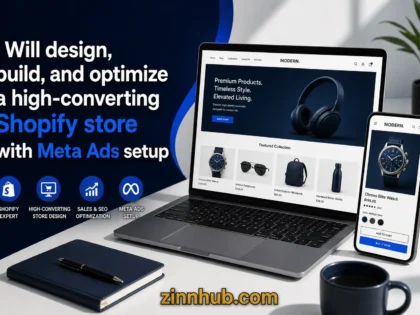
 - I Will design, build, and optimize a high-converting Shopify store with Meta Ads setup Verified Zinner Level 1I will build or redesign your Shopify store for maximum conversions and set up Meta/Facebook ad campaigns that drive the right traffic…
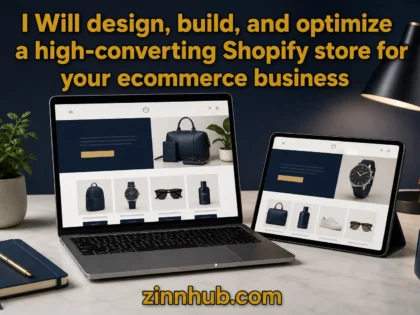
- I Will design, build, and optimize a high-converting Shopify store for your ecommerce business Verified Zinner Level 1Get a professional, mobile-responsive Shopify store designed to convert visitors into customers. Services include store setup, theme customization, product uploads, landing pages,…
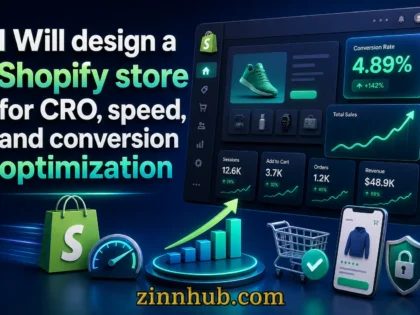
- I Will design a Shopify store for CRO, speed, and conversion optimization Verified Zinner Level 1Shopify CRO expert helping store owners fix low conversions, slow speed, and poor UX. I improve your Shopify store's performance, user experience,…
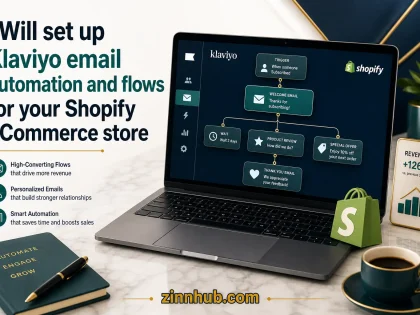
- I Will set up Klaviyo email automation and flows for your Shopify eCommerce store Verified Zinner Level 1I will set up Klaviyo email automation for your eCommerce brand, including welcome flows, abandoned cart recovery, win-back sequences, post-purchase emails, branded…
- I Will Build Custom Shopify Automation, AI Chatbots, and eCommerce Software Verified Zinner Level 1Stop juggling disconnected tools and manual processes. I build custom Shopify apps, AI chatbots, automation workflows, and analytics dashboards — backed by…
- I Will Provide Full Monthly Shopify SEO Including On-Site, Link Building, GEO SEO and Landing Pages Verified Trusted Zinner Hot Zinner Zinner Level 4Monthly Shopify SEO covering full on-site optimisation, high-quality link building, GEO SEO and AI visibility, 5 blog posts, a new conversion landing…
- I Will Boost Shopify Store Sales With Marketing, Klaviyo & SEO Verified Zinner Level 1Full-service Shopify growth — from store audit to Klaviyo drip campaigns, paid social ads, SEO, and complete store revamp. I help Shopify…
- I Will Design or Redesign Your Shopify Store, Dropshipping Store or Ecommerce Website for Conversions Verified Zinner Level 1I'll design or redesign your Shopify store with a professional, clean, conversion-focused layout — homepage design, product pages, branding, essential pages and…
- I Will Design a Professional Shopify Ecommerce Store, Landing Page or Dropshipping Website That Converts Verified Zinner Level 2I'll design a professional, high-converting Shopify ecommerce store, landing page or dropshipping website — with premium theme customisation, product uploads, payment integration,…
- I will design and develop a high converting Shopify store Verified Zinner Level 1I design high-converting Shopify stores that are optimized for sales, speed, and a seamless user experience.
- I Will Build a Compliant CBD Shopify Store for Cannabis, Hemp, Vape & Tobacco Brands Verified Zinner Level 1I'll build a professional, fully compliant CBD Shopify store for cannabis, hemp, vape, tobacco and marijuana brands — with age verification, high-risk…




Micro Zinns ⚡
- I will write one seo shopify product description that converts Verified Trusted Zinner Hot Zinner Zinner Level 4Your product photos get the click, but the description closes the sale, and most Shopify descriptions are doing nothing more than listing…
- I will optimise 10 Shopify products with advanced SEO Verified Trusted Zinner Hot Zinner Zinner Level 4Shopify stores rarely lose sales for lack of products; they lose them for lack of visibility. Product pages with weak titles, missing…
- I will build a simple Shopify automation workflow for your store Verified Zinner Level 1Running your Shopify store often means repetitive manual tasks that eat into time you could spend growing your business. Whether it's updating…
- I will Audit your Shopify store's SEO foundation and create one optimised landing Verified Trusted Zinner Hot Zinner Zinner Level 4Your Shopify store could be haemorrhaging potential customers through poor SEO foundations that you're not even aware of. Many store owners focus…




Types of Shopify Development Available
The work US-based Zinners are most often booked for.
Store Setup & Launch
Theme Customisation
Custom Liquid Sections
Checkout Extensibility
Shopify Plus & B2B
Headless & Hydrogen
Platform Migrations
Speed & Core Web Vitals
The Complete Guide to Hiring US Shopify Developers
The market, the compliance layer and the checks that separate a good hire.
Who American Shopify Developers Actually Are
The United States is a major Shopify merchant market, and its freelance bench splits into three groups that are not interchangeable. Agency alumni have shipped large builds, are comfortable with staging and handover, and price accordingly. Theme specialists live inside Liquid, turn small work around quickly, and are the right hire for a broken section or a new template. App and Plus engineers write Shopify Functions, checkout UI extensions and Storefront API front ends, and are the only people who should touch a headless build. Ask which of the three a candidate is before you ask their rate.
Selling to Americans: Language, Formats and Where They Search
A US store is expected to read as American. Use US spellings in the interface and product copy — color, catalog, jewelry, customize — set through the theme's language editor rather than by hand-editing Liquid, so the wording survives a theme update. Use imperial weights, month-day-year dates, and an address form with a state dropdown and a five or nine digit ZIP. Selling to Britain or Canada too? Use Shopify Markets rather than a duplicate store, and let a US content writer handle the American voice.
Google dominates American search, so ordinary technical SEO carries the weight: clean collection and product URLs, canonical tags on filtered views, and Product schema markup with price and availability. Two US-specific points matter. Bing holds a real desktop share here, well above its global figure, because Edge and Windows default to it, so Bing Webmaster Tools and Microsoft Advertising are cheap traffic most stores skip. And many American product searches never reach a general search engine at all — they begin on Amazon, TikTok or Google Shopping's free listings, so treat Google Shopping and Shopify SEO as one job.
Tax, Accessibility and Privacy: the US Compliance Layer
Three things bite American stores that rarely trouble anyone else. Sales tax is charged state by state, and economic nexus means crossing a state's sales or transaction threshold creates an obligation there; Shopify Tax calculates it only for the states you have registered, and product tax codes matter because clothing and groceries are treated differently state to state. Accessibility is where the legal exposure sits: WCAG 2.1 AA is the working standard, ADA-based complaints about retail websites are a real risk, and overlay widgets are no defence — contrast, keyboard-operable menus, focus states, form labels and image alt text cost little at build time. Privacy means the CCPA and CPRA plus other state laws: a consent banner, a real opt-out of sale or sharing, and Global Privacy Control honoured. For marketing SMS, 10DLC registration and TCPA consent are not optional.
Checkout Extensibility and the Technical State of Play
Shopify has moved fast, and a developer who has not moved with it will cost you money. Checkout Extensibility replaced the old editable checkout template, so branding, upsells and custom checkout logic are built with checkout UI extensions and Shopify Functions — ask whether a candidate has shipped a checkout UI extension. Online Store 2.0 means JSON templates, sections on every page and metafields with metaobjects; where content is hard-coded into Liquid, every future change needs the developer. Theme app extensions are how apps should inject code, so an app still writing script tags into your theme is a red flag. Hydrogen and Oxygen give a React storefront on the Storefront API: right for a large catalogue, wrong at a hundred orders a week.
Time Zones, Black Friday and the Brief
The mainland spans four zones — Eastern UTC-5, Central UTC-6, Mountain UTC-7 and Pacific UTC-8 on standard time, each an hour later again during daylight saving — with Alaska and Hawaii beyond. American clocks change out of step with Europe by roughly two to three weeks in spring and about a week in autumn, so in those spells the London to New York gap is four hours rather than five. An Eastern developer overlaps a British afternoon, a Pacific one a British evening. The calendar then matters more than the clock: Black Friday and Cyber Monday govern the American retail year, and most developers impose a code freeze from early November. Land a significant build by late September, or wait until January.
Most stalled orders fail on the brief, not the developer. Six things make yours quotable: the store URL and Shopify plan, because Basic, Shopify, Advanced and Plus differ in capability; the theme name and version, and whether it has been customised, since a heavily edited theme cannot simply be updated; the app list, because apps are usually where the conflict is; the problem in one sentence, with a screen recording if it is a bug; whether checkout is involved; and the deadline measured against the trading calendar. Give access through a staff account with scoped permissions and a duplicated theme — never share your own login.
Judging Quality, Budgeting and Getting Started
Screenshots prove nothing on Shopify, so ask for live store URLs and run four checks. Open one on your phone, add to cart and begin checkout, because that is the journey that earns money. Run a product page through a page-speed tool and read the mobile score. Ask whether they use the Shopify CLI and the GitHub integration, because browser-only theme edits leave no version history. Ask how they would add a custom field to a product — metafields is the right answer, hard-coded Liquid is not. Shortlist with the Shopify and Shopify development categories, or the Shopify migration, Hydrogen, Core Web Vitals and conversion rate optimisation skill listings.
Budget in three buckets: build, apps and aftercare. American rates sit above offshore rates, so hire a US developer for work needing judgement and matching hours, and place routine catalogue and support tasks with a US virtual assistant or through the e-commerce management marketplace. Creative and marketing sit alongside the build: email marketing with Klaviyo, US graphic designers, US video editors, US social media managers, and the e-commerce marketing and conversion rate optimisation marketplaces.
Browse verified developers in the Shopify expert marketplace, or compare adjacent US benches in USA web design, USA WordPress developers and USA SEO services. If the scope is still loose, post the job free in Projects; a one-line fix is often a fixed-price Micro Zinn. The buyer's payment is held in escrow until they accept the delivery and there is no platform fee for buyers, while on the seller side Zinners pay 0% commission on their first $500 in sales and their share is released at checkout — which is why many independent American developers list here, as compared on our Fiverr alternative for the USA, Upwork alternative for the USA, Fiverr alternative for Shopify and Braintrust alternative pages. Developers can list their own services from the sell Shopify development services page.
Typical Pricing for US Shopify Developers
Typical marketplace ranges in USD — not a Zinn Hub guarantee. Every Zinner sets their own price.
Fixes & Small Tasks
Theme bugs, app configuration, a new section, speed tidy-ups
Store Setup & Theme Build
Launch on Dawn or a premium theme, catalogue import, tax and shipping setup
Custom, Plus & Headless
Bespoke sections, Shopify Functions, checkout extensions, B2B and Hydrogen builds
How to Hire a US Shopify Developer
Three steps to get started.
Browse and Shortlist
Browse the Shopify listings and check each Zinner's stated location on their profile, then compare live store URLs, Shopify specialism, delivery time and USD price.
Send the Brief
Message your shortlist with the store URL, Shopify plan, theme name and version, app list and deadline. Agree scope, revision rounds and whether the work touches checkout.
Order with Escrow
Pay in USD by card, PayPal or cryptocurrency with no buyer fee. Funds stay in escrow until you accept the delivery, and a refunded order returns to your Zinn Wallet.
Zinns
- I Will Design a Professional Shopify Dropshipping Store With AutoDS, CJ and AliDropship Verified Zinner Level 1Get a fully built, sales-ready Shopify dropshipping store complete with product imports, branded design, payment integration, on-page SEO and automated backend processes — delivered fast, ready to trade.
- I Will design, build, and optimize a high-converting Shopify store with Meta Ads setup Verified Zinner Level 1I will build or redesign your Shopify store for maximum conversions and set up Meta/Facebook ad campaigns that drive the right traffic — creating a complete eCommerce system…
- I Will design, build, and optimize a high-converting Shopify store for your ecommerce business Verified Zinner Level 1Get a professional, mobile-responsive Shopify store designed to convert visitors into customers. Services include store setup, theme customization, product uploads, landing pages, UI/UX improvements, and dropshipping store configuration.
- I Will design a Shopify store for CRO, speed, and conversion optimization Verified Zinner Level 1Shopify CRO expert helping store owners fix low conversions, slow speed, and poor UX. I improve your Shopify store's performance, user experience, and pixel tracking so your ads…
Micro Zinns
- I will write one seo shopify product description that converts Verified Trusted Zinner Hot Zinner Zinner Level 4Your product photos get the click, but the description closes the sale, and most Shopify descriptions are doing nothing more than listing specifications at people. This micro replaces…
- I will optimise 10 Shopify products with advanced SEO Verified Trusted Zinner Hot Zinner Zinner Level 4Shopify stores rarely lose sales for lack of products; they lose them for lack of visibility. Product pages with weak titles, missing meta descriptions, unoptimised headers and absent…
- I will build a simple Shopify automation workflow for your store Verified Zinner Level 1Running your Shopify store often means repetitive manual tasks that eat into time you could spend growing your business. Whether it's updating inventory, sending follow-up emails, or processing…
- I will Audit your Shopify store's SEO foundation and create one optimised landing Verified Trusted Zinner Hot Zinner Zinner Level 4Your Shopify store could be haemorrhaging potential customers through poor SEO foundations that you're not even aware of. Many store owners focus on driving traffic without realising their…
Zinn Categories

Micro Zinn Categories
Freelancers
- Zinn Digital ™ LTD Verified Partner Available now Verified Trusted Zinner Hot Zinner Zinner Level 4Full Stack Developer & SEO Strategist | 25+ Years | WordPress, Python, Shopify, Link Building & Paid Ads
- Anns Akbar Verified Available now Verified Zinner Level 1Tiktok Shop Expert | Tiktok Shop Affiliates | Tiktok Shop GMV Max Ads
- Humera Rafath Verified Available now Verified Zinner Level 1SEO Specialist
- Hammed Jamiu Verified Available now Verified Zinner Level 1Certified Shopify Designer & eCommerce Growth Expert | Shopify CRO optimization | Facebook Ads Expert




Freelancer Categories
Sellers
- Rildwan Verified Zinner Level 2Hi, I’m Abdulsalam Rildwan, a results-focused Ecommerce Marketing Specialist helping brands scale with data-driven strategies. I specialize in Google Ads campaign setup, Google Merchant Center, GA4 conversion tracking,…
- sam-folio-pro.lovable.app Verified Zinner Level 1Hello Awesome Buyer I'm StoreDesignerx, a website and Ecommerce development expert with years of experience i was able to build a responsive website and Ecommerce stores that was…
- ShopifybrainTeam Verified Zinner Level 1Hi Esteemed client, Your AI system isn't just a bot, it's a 24/7 revenue machine. I build it right the first time. If you've dealt with: ❌ Chatbots…
- Dima Lysyj AI Studio Verified Zinner Level 1Я створюю AI-візуали для бізнесу та приватних клієнтів. Що я пропоную: 📸 Продуктові фото для інтернет-магазинів (Rozetka, Prom, Amazon, Shopify) 🖼️ Реставрація та колоризація старих фото 🎨 Банери…




Articles
- Shopify SEO Marketplace
- US Shopify Developers
- Sell Shopify Development Services
- Upwork alternative shopify Upwork Alternative · Shopify The Upwork Alternative Built for Shopify Development Skip the Connects, the bidding wars and the endless proposals. Zinn Hub® connects you directly with verified…
Help
- Freelancer Categories on Zinn Hub …pers, WooCommerce Developers, Shopify Developers, Wix Developers, Squarespace Developers, Webflow Developers, Custom Web Application Developers, Landing Page Specialists, Website Maintenance Experts, Website Redesigners, No-Code & Low-Code Developers, Frontend…
- How to Find Services on Zinn Hub …h niche with dofollow links" "Shopify store setup with payment integration" Search in any language — AI Search supports full multi-language search. Type your query in Spanish, German,…
- How Zinn Hub Matches Freelancers to Projects (and How to Invite Them) …ch vaguely. Specific skills ("Shopify API, Liquid, Webhooks") match precisely. Pick the right category — a project in the wrong category won't match the right Zinners. If your…
- Project Categories on Zinn Hub …pment WooCommerce Development Shopify Development Custom Web Applications Landing Pages Website Maintenance & Fixes Website Redesign Frontend Development Backend Development UI/UX Design Or post to the main Website…
Micro Zinns ⚡
- I will write one seo shopify product description that converts Verified Trusted Zinner Hot Zinner Zinner Level 4Your product photos get the click, but the description closes the sale, and most Shopify descriptions are doing nothing more than listing…
- I will optimise 10 Shopify products with advanced SEO Verified Trusted Zinner Hot Zinner Zinner Level 4Shopify stores rarely lose sales for lack of products; they lose them for lack of visibility. Product pages with weak titles, missing…
- I will build a simple Shopify automation workflow for your store Verified Zinner Level 1Running your Shopify store often means repetitive manual tasks that eat into time you could spend growing your business. Whether it's updating…
- I will Audit your Shopify store's SEO foundation and create one optimised landing Verified Trusted Zinner Hot Zinner Zinner Level 4Your Shopify store could be haemorrhaging potential customers through poor SEO foundations that you're not even aware of. Many store owners focus…
Frequently Asked Questions
Common questions about hiring Shopify developers in the USA.
They work inside a deep Shopify Partner ecosystem and in your own trading hours, so a same-day fix is realistic. They also know what catches offshore teams out: economic nexus sales tax, ADA and WCAG accessibility exposure, state privacy laws such as the CCPA, and the Black Friday code freeze.
Typical marketplace ranges in USD are roughly $30 to $150 for a theme fix or app configuration, $400 to $2,500 for a store setup or theme build, and $2,500 upwards for custom sections, Shopify Functions, checkout extensions, a Plus rollout or a headless Hydrogen storefront. These are observed ranges across the market, not a Zinn Hub price guarantee, and every Zinner sets their own USD price.
The mainland spans Eastern at UTC-5, Central at UTC-6, Mountain at UTC-7 and Pacific at UTC-8 on standard time, each an hour later again during daylight saving, with Alaska and Hawaii beyond. American clocks change on the second Sunday in March and the first Sunday in November, out of step with Europe by roughly two to three weeks in spring and about a week in autumn, so in those spells the London to New York gap is four hours rather than five. Hawaii and most of Arizona never observe daylight saving.
Not strictly, but it removes guesswork. US sales tax is charged state by state, and economic nexus rules mean a store can owe tax in a state it has never physically entered, so registrations, Shopify Tax settings and product tax codes must be configured deliberately. Accessibility is the sharper risk: WCAG 2.1 AA is the working standard, and an overlay widget is not a defence.
Your store URL and Shopify plan, the theme name and version and whether it has been customised, the installed app list, the problem or feature in one sentence, whether checkout is involved, your product and variant counts, the launch date, and what you expect at handover. Give access through a staff account with scoped permissions rather than sharing your own login.
Zinners are ID- and skill-verified before they can sell, and reviews come only from confirmed purchases. Your payment is held in escrow and released when you accept the delivery, and a refunded order returns to your Zinn Wallet. There is no platform fee for buyers, prices are set in USD, over 100 payment methods are supported, and the site renders in 45 site languages.
Explore More US Shopify Developers Options
Discover related services, locations, and alternatives on Zinn Hub