



China SEO Services from Verified China-Focused Experts
Hire verified Zinners who optimise for Baidu, Sogou, 360 and Shenma. Simplified-Chinese keyword research, hosting and in-country speed guidance, and escrow-protected payments.
Why Hire a China SEO Specialist?
Chinese search is a different engine, a different language and a different network. General SEO skill does not transfer.
A Search Market Google Does Not Serve
Mainland China has a very large online population, and Google is not a meaningful traffic source there. Baidu leads, with Sogou, 360, Shenma and Bing behind it.
Native Simplified Chinese
Baidu ranks Chinese-language pages. A machine translation of your English site reads as machine translation to both the algorithm and the customer.
Hosting and Latency Reality
Where the site is served from decides how fast it loads for a Chinese reader, and Baidu treats that speed as a ranking input. A specialist will weigh mainland, Hong Kong and offshore hosting against what your business can actually set up.
Third-Party Asset Checks
Google Fonts, Google Analytics, reCAPTCHA and YouTube embeds are slow or unreachable for many visitors in China. One render-blocking request to an unreachable host can stall your page for tens of seconds.
Beyond Search Boxes
WeChat, Xiaohongshu and Zhihu are discovery surfaces in their own right. Counting Baidu positions alone misses where much purchase research actually happens.
Escrow Protection
As the Zinnector®, your payment is held until the work is delivered and you confirm it meets the specification you agreed; on the seller side, the Zinner's share is released at checkout. Verified reviews come only from confirmed purchases.
Top Zinns ⚡
-
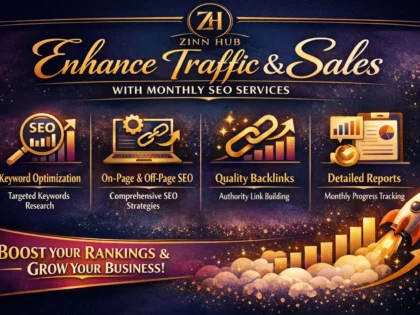
 enhance traffic and sales with monthly SEO services Verified Trusted Zinner Hot Zinner Zinner Level 4Keyword Research (5-10) 1 pages On-Page & Off-Page SEO Product/Service Monthly Report | Own the Digital Space with DIGIOWN
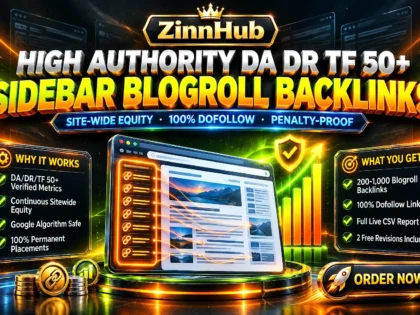
 - I Will Build High Authority DA DR TF 50+ Sidebar Blogroll Backlink Services for SEO Ranking Verified Rising Zinner Zinner Level 1🚀 Boost Your Search Engine Visibility with High-Authority Blogrolls Standard contextual links inside buried blog posts often lack the continuous authority needed…
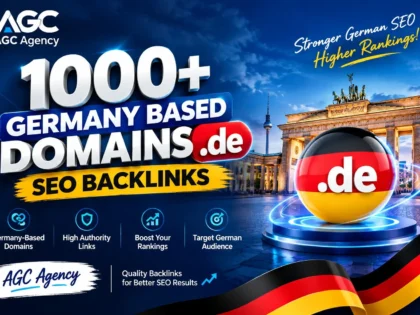
- I Will Build 1000+ Germany .DE Domain Backlinks for German SEO and Link Building Verified Zinner Level 1Boost your German SEO with 1000+ Germany-based .DE backlinks from high-authority domains. Strengthen your website’s domain authority, link profile, rankings, and visibility…
- I Will audit your local SEO and Google Maps presence with competitor analysis Verified Zinner Level 1Find the local SEO gaps affecting your Google visibility. I’ll audit your Google Business Profile, website, Google Maps presence and competitors, then…
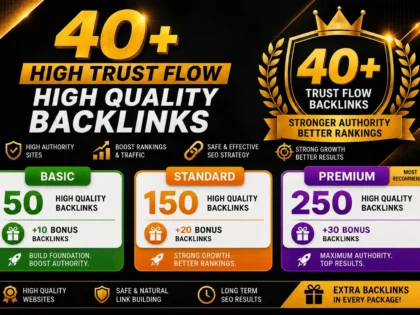
- I Will Build 200 High-Quality Dofollow Backlinks from Mixed Platforms for SEO Verified Zinner Level 1Boost your website with 200 Do-follow back-links mix platforms A do-follow link is a link that will pass on the SEO benefits…
- I Will Build Manual High DA Dofollow Backlinks for Off-Page SEO With Full Report Verified Zinner Level 1I will build high-quality manual dofollow backlinks from relevant websites to strengthen your backlink profile, improve website authority, and support long-term SEO…
- do SEO services to rank on google in canada Verified Trusted Zinner Hot Zinner Zinner Level 4This plan is best suited for the Local business who want to rank within a city | Top Australian SEO featured on…
- I Will Provide High DA Backlink Services for AI SEO Link Building and GEO Rankings Verified Rising Zinner Zinner Level 1🤖 Next-Gen AI Search Engine Visibility with Generative Engine Optimization (GEO) Search engine optimization is undergoing a massive shift. Modern AI search…
- I Will Build 1,000+ Niche-Relevant Crypto and Blockchain Dofollow Backlinks for SEO Verified Zinner Level 1Build a stronger online presence with 1,000+ high-quality blockchain and crypto backlinks designed to support your SEO strategy. Get niche-relevant link building…
- I Will optimize your website and Google Business Profile for local SEO Verified Zinner Level 1I optimize your website and Google Business Profile to build a stronger local SEO foundation, improve search visibility, strengthen relevance, and create…
- do monthly SEO services for your website Verified Trusted Zinner Hot Zinner Zinner Level 4Keyword Performance Review, Technical Health Check, 1 Blog Post | Proven partner to SMBs and Fortune 500 for SEO and PPC
- I Will Provide High DA iGaming Casino PBN Backlink Services for Gambling SEO Verified Rising Zinner Zinner Level 1🎰 High-Impact iGaming & Casino Link Velocity for Competitive Keyword Rankings Securing high-authority, niche-relevant high DA backlinks for online casino, gambling, betting,…






Types of China SEO Services Available
What China-focused Zinners commonly list.
Baidu Technical Audits
Simplified-Chinese Keyword Research
Baidu Webmaster Submission
Chinese Content Writing
Hreflang and Multi-Region Setup
In-Country Speed Optimisation
WeChat and Xiaohongshu Discovery
Monthly Baidu Management
The Complete Guide to SEO for the Chinese Market
What genuinely differs from Google SEO, and how to brief a specialist properly.
Baidu Is the Engine, and It Behaves Differently
Inside mainland China, Google is not a meaningful traffic source. Baidu is the leading general engine, with Sogou (owned by Tencent), 360 Search, Shenma (a mobile-first engine in the Alibaba orbit) and Bing behind it. Optimising for Baidu is not Google SEO with translated text on top. Baidu is markedly weaker at rendering JavaScript, so content that only exists after a client-side framework hydrates may never be indexed — server-rendered HTML is the safe default. It weights domain history and in-country trust signals heavily, so a new domain climbs slowly. And it gives prominent placement to its own properties: Baike, Zhidao and Tieba often occupy much of the first screen, so earning presence there is part of a serious strategy. Look for a Baidu SEO specialist, not a generalist who lists Baidu as an afterthought.
The Technical Baseline: Hosting, Latency and Load Time
The most consequential decision is where the site is hosted. Baidu will index a site served from anywhere, but it treats in-country load speed as a ranking input, and a European or US origin is usually slow enough for a Chinese reader to notice. Mainland hosting gives the best latency; setting it up involves a registration process that depends on your company structure and changes over time, so treat it as a question for a specialist and your host rather than something to settle from a page like this one. Hong Kong hosting is the usual compromise: much lower latency than a European origin without setting up in the mainland, and it is where most overseas businesses land. The universal fundamentals still apply, so a proper technical SEO pass and honest Core Web Vitals work remain worth commissioning — but measured from inside China, not from a test server in Frankfurt. The wider technical SEO marketplace is a good starting point.
Audit your existing site from inside China before commissioning content. Many Western sites are slow or unusable there for a reason unrelated to rankings: they depend on third-party resources that do not load well for Chinese visitors. Google Fonts, googleapis.com and gstatic.com assets, Google Analytics, Google Maps, reCAPTCHA, YouTube embeds and Meta scripts are commonly slow or unreachable, and one render-blocking request to an unreachable host can leave a page blank for tens of seconds. The fixes are unglamorous and effective: self-host fonts, replace the embeds that do not load, swap reCAPTCHA for an alternative that resolves in China, and use analytics that work there. It is often the highest-return work on a China project, measured in page speed rather than rankings.
Baidu Webmaster Tools and Getting Indexed
Baidu Search Resource Platform — still widely called Baidu Zhanzhang — is the equivalent of Google Search Console, and it is where a China campaign begins. You verify ownership, submit a sitemap, and push new and updated URLs through the link submission interface. Unlike Google, active submission genuinely matters, because passive discovery of a foreign-hosted site can be extremely slow. Two things trip people up. The interface and documentation are in Chinese, and some features expect a mainland mobile number to verify, so a China-fluent operator is close to essential. And Baiduspider must be explicitly allowed in robots.txt — plenty of sites block it unknowingly through a firewall or bot-protection rule that treats an unfamiliar Chinese crawler as hostile. A focused SEO audit that checks this first is money well spent.
Simplified or Traditional Chinese Is a Market Decision
Baidu serves simplified Chinese, the written standard in mainland China and Singapore. Traditional Chinese is used in Taiwan, Hong Kong and Macau — and in those markets the dominant engine is Google, not Baidu, which is why the script decision is really a market decision. A character-set conversion is not a localisation: vocabulary, product naming, idiom and tone differ, and a Taiwanese reader recognises mainland phrasing instantly. Hire for simplified Chinese or traditional Chinese deliberately, and treat Chinese translation as the input to a rewrite rather than the finished product. If you serve more than one market, publish separate URL sets marked up with hreflang values such as zh-Hans-CN, zh-Hant-TW and zh-Hant-HK rather than a generic zh, which forces the engine to guess. See China content writing for Zinners who draft in Chinese from the outset.
Why Literal Keyword Translation Fails
Translating your English keyword list and handing it to a copywriter is one of the most common and most expensive mistakes in China SEO. Written Chinese has no spaces between words, so the engine segments a query into units — and a translated phrase may segment into units nobody searches for. Chinese searchers also use different terms: the direct translation of an English head term is often technically correct and commercially dead, while the phrase with real demand is a colloquialism you would never derive from English. Brand names complicate it further, because most foreign brands end up with both a pinyin form and a Chinese-character name that behave as two separate keywords. Real keyword research here uses Chinese demand data such as Baidu Index, alongside the phrasing that appears in Zhihu answers and Xiaohongshu posts.
Search Is Not Only Search: WeChat, Xiaohongshu and Zhihu
A great deal of Chinese product research never touches a general search engine. WeChat is close to an operating system for daily life, and its in-app search surfaces Official Account articles and Mini Programs that Baidu cannot index at all — a closed ecosystem you must publish into directly. Xiaohongshu works as a search engine for lifestyle, beauty, travel and consumer goods, where users search reviews before they search shops. Zhihu, the long-form question-and-answer platform, is both a destination in its own right and a source of threads that rank strongly in Baidu, which makes a well-answered Zhihu question one of the more reliable routes onto page one. Ask a prospective Zinner how they will split effort between your own domain, Baidu-owned properties and these surfaces. Earned China backlinks from Chinese-language domains still carry real weight.
Should You Target Baidu at All?
This is the question a good specialist asks first. Baidu is the right target when you can genuinely transact in the mainland: a local entity or distributor, mainland payment methods, workable logistics and Chinese-language support. Without those, ranking well simply produces enquiries you cannot fulfil. If your Chinese-speaking buyers sit outside the mainland — Hong Kong, Taiwan, Singapore, Malaysia or the diaspora — then Google is the engine they use, and the project becomes a Chinese-language international SEO or multilingual SEO build on infrastructure you already control: no mainland hosting to arrange, far cheaper and faster to launch. That path pairs naturally with Singapore SEO services, Malaysia SEO services, Japan SEO services and South Korea SEO services.
Getting Started with China SEO Services on Zinn Hub
Whether you need a Baidu-focused technical audit, a simplified-Chinese keyword map, Search Resource Platform setup, hreflang architecture, or monthly management, you can compare verified Zinners and hire in one place. Browse the wider SEO services marketplace or the search engine optimisation category, read what freelance SEO typically costs before setting a budget, and if you have sourced Chinese providers elsewhere, the Zhubajie alternative comparison explains how Zinn Hub differs. As the Zinnector your payment is held in escrow, buyers pay no platform fee, and your first order is free with the full amount returned on completion.
Typical Pricing for China SEO Services
Indicative marketplace ranges in USD. Every Zinner sets their own price — browse for exact quotes.
Baidu Audit & Keyword Map
Audit from inside China, third-party asset check, simplified-Chinese keyword research, action plan
Monthly China SEO
Ongoing Baidu optimisation, simplified-Chinese content, submission management, monthly reporting
Market-Entry Programme
Hosting and latency guidance, full site localisation, hreflang architecture, Zhihu and Xiaohongshu discovery
How to Hire China SEO Experts
Three simple steps to get started.
Browse Experts
Compare Zinners running mainland Baidu campaigns against those targeting Chinese-language buyers on Google. Check specialisations, pricing and reviews.
Choose & Discuss
Message them about your entity status, hosting, target load times and which region you sell to. A good specialist will say if Baidu is the wrong target.
Hire with Protection
Pay securely with escrow protection. Funds are only released when the work is delivered and you confirm it meets your specifications.
Zinns
- enhance traffic and sales with monthly SEO services Verified Trusted Zinner Hot Zinner Zinner Level 4Keyword Research (5-10) 1 pages On-Page & Off-Page SEO Product/Service Monthly Report | Own the Digital Space with DIGIOWN
- I Will Build High Authority DA DR TF 50+ Sidebar Blogroll Backlink Services for SEO Ranking Verified Rising Zinner Zinner Level 1🚀 Boost Your Search Engine Visibility with High-Authority Blogrolls Standard contextual links inside buried blog posts often lack the continuous authority needed to move competitive keywords to top…
- I Will Build 1000+ Germany .DE Domain Backlinks for German SEO and Link Building Verified Zinner Level 1Boost your German SEO with 1000+ Germany-based .DE backlinks from high-authority domains. Strengthen your website’s domain authority, link profile, rankings, and visibility in Google Germany with targeted German…
- I Will audit your local SEO and Google Maps presence with competitor analysis Verified Zinner Level 1Find the local SEO gaps affecting your Google visibility. I’ll audit your Google Business Profile, website, Google Maps presence and competitors, then provide a clear action plan to…
Zinn Categories
Freelancers
- Tamoor SEO Verified Partner Available now Verified Trusted Zinner Hot Zinner Zinner Level 3SEO Specialist | PBN Backlinks & Authority Link Building Expert for High-Competition Niches
- FirstSeo Verified Available now Verified Zinner Level 1SEO Specialist | Link Building | GSA SER | Technical SEO | E-commerce SEO
- Syed ibrahim khalil ullah Verified Available now Verified Zinner Level 1Professional On-Page & Off-Page SEO Expert | High Authority DoFollow, Web 2.0 & Social Profile Mixed Links |…
- Rise Ranker Verified Available now Verified Zinner Level 1Rise Ranker SEO Agency | Professional SEO Services Since 2018




Sellers
- zinn digital® Verified Trusted Zinner Hot Zinner Zinner Level 4Welcome to Zinn Digital®, the team behind Zinn Hub itself. With years of experience in web development, SEO, and digital marketing, we don't just build platforms – we…
- spatialecomm_llc Verified Zinner Level 1Who Am I? I'm Lawal Uthman a business marketing llc specialist with 3 years of hands-on experience helping businesses, brands and creators grow through strategic Reddit marketing, Social…
- AGC Agency Verified Zinner Level 1I help businesses and website owners improve their search engine rankings through high-quality, white-hat backlink building strategies. With expertise in off-page SEO, I specialize in acquiring authoritative, niche-relevant…
- SEO MASTER Verified Zinner Level 1Welcome to my SEO and Link Building Store! I specialize in providing high-quality SEO services designed to help websites improve their online presence and search engine visibility. With…




Articles
Help
- How To Add A Support Agent or Other Zinners To Your Zinn …es. For example, if you offer SEO services and another Zinner offers web development, you could create a Zinn that covers both, assign the developer as a support…
- How to Create a Zinn (Service Listing) …DA dofollow backlinks” beats “SEO services”), up to 3 categories , relevant skills/tags , the service type (one-time or subscription), and an AI-usage declaration (whether you use AI…
- Understanding Zinn Hub Terminology …"As a Zinner, I specialise in SEO services."* Zinnector A Zinnector is a buyer or client on Zinn Hub. Zinnectors browse and purchase Zinns from Zinners. *Example: "The…
- Creating & Selling Your Digital Services on Zinn Hub What Can You Sell on Zinn Hub? Almost anything digital. Zinn Hub supports an incredibly diverse range of freelancer services across every industry imaginable. Here are just some…
Frequently Asked Questions
Common questions about hiring SEO experts for the Chinese market.
It depends on where your buyers are. Baidu is the leading general search engine in mainland China, so if you can invoice, ship and support mainland customers, Baidu is the primary target. If your Chinese-speaking audience sits in Hong Kong, Taiwan, Singapore or the diaspora, Google is the engine they use, and a Chinese-language Google strategy costs far less.
No. Baidu can index a site hosted anywhere. What it does weigh is how quickly the page loads for a reader in China, and a European or US origin is usually slow enough to cost you both rankings and conversions. Hong Kong hosting is the usual compromise: much lower latency without setting up in the mainland. The registration and paperwork side of mainland hosting depends on your company structure and changes over time, so take current advice from a specialist and your host.
Baidu leans harder on simplified-Chinese on-page signals, server-rendered HTML, fast local load times and domain history, and is much weaker than Google at rendering JavaScript. It also gives heavy placement to its own properties such as Baike, Zhidao and Tieba. Submission runs through Baidu Search Resource Platform, not Google Search Console.
Simplified Chinese for mainland China and Singapore, traditional Chinese for Taiwan, Hong Kong and Macau. They are not interchangeable, and a character conversion is not a localisation: vocabulary, product naming and tone all differ. If you serve more than one, publish separate URL sets marked up with hreflang values such as zh-Hans-CN, zh-Hant-TW and zh-Hant-HK.
Chinese searchers rarely use the direct translation of an English head term, and written Chinese has no spaces, so the engine segments a query into units a translated phrase may never match. Brand names also split into a pinyin form and a Chinese form. Real keyword work uses Baidu Index instead.
Typical marketplace ranges are roughly $150 to $500 for a Baidu-focused technical and keyword audit, $400 to $1,500 a month for ongoing optimisation and simplified-Chinese content, and $1,500 upwards for a full market-entry programme. These are indicative ranges across the marketplace rather than a Zinn Hub guarantee, and every Zinner sets their own price.
Every Zinner is ID- and skill-verified, and reviews come only from confirmed purchases. As the Zinnector, your payment is held in escrow and released when you confirm the work meets your agreed specification; on the seller side, the Zinner's share is released at checkout. Buyers pay no platform fee and can pay with over 100 methods including card, PayPal and cryptocurrency.
Explore More China SEO Services Options
Discover related services, locations, and alternatives on Zinn Hub