



Japan SEO Services from Verified Japanese SEO Specialists
Hire verified Zinners who optimise for the Japanese market: keyword research across kanji, hiragana and katakana, Google and Yahoo! Japan visibility, mobile-first technical work, and escrow-protected payment.
Why Choose Japan SEO Specialists?
What a Japan-based specialist gives you that a translation cannot.
Three-Script Keyword Research
The same idea is written in kanji, hiragana and katakana, and each spelling carries its own search volume. Japanese specialists find every variant, judge which form real searchers type, and consolidate the data.
Google and Yahoo! Japan
Yahoo! Japan serves Google organic results under licence, but it is also a portal with news, shopping and auctions pushing traffic into the page. A specialist plans for the shared index and the different surface around it.
Mobile-First and LINE-Aware
Japanese search is heavily phone-led, and many shared links open inside the LINE in-app browser. Specialists optimise render speed, tap targets and link previews so a ranking actually converts.
Japanese Trust Conventions
Japanese buyers expect dense, complete pages: company profile, registered address, representative, contact route and the required commercial disclosures. A sparse Western page reads as unfinished.
Verified Zinners
Every Zinner offering SEO services on Zinn Hub is ID and skill verified, and reviews are published only from confirmed purchases, so the track record you read is real.
Escrow Protection
As the Zinnector®, your payment is held in escrow until the work is delivered and you confirm it meets the agreed specification; on the seller side, the Zinner's share is released at checkout. Buyers pay no platform fee, and over 100 payment methods are supported.
Top Zinns ⚡
-
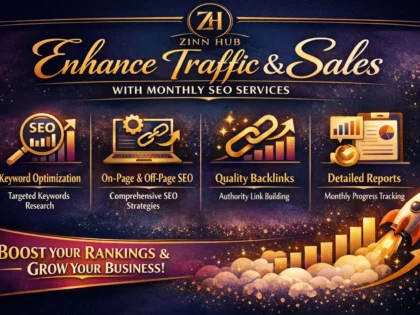
 enhance traffic and sales with monthly SEO services Verified Trusted Zinner Hot Zinner Zinner Level 4Keyword Research (5-10) 1 pages On-Page & Off-Page SEO Product/Service Monthly Report | Own the Digital Space with DIGIOWN
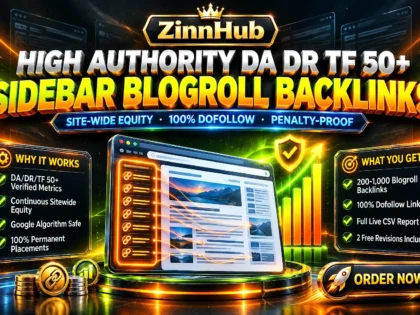
 - I Will Build High Authority DA DR TF 50+ Sidebar Blogroll Backlink Services for SEO Ranking Verified Hot Zinner Zinner Level 2🚀 Boost Your Search Engine Visibility with High-Authority Blogrolls Standard contextual links inside buried blog posts often lack the continuous authority needed…
- I Will Manage a 7-Day Reddit SEO Marketing Campaign for Your Business or Website Verified Zinner Level 1Get your business discovered with a focused 7 day Reddit SEO marketing strategy. I’ll research relevant subreddits, keywords, audiences, and content opportunities,…
- I Will Build 1000+ Germany .DE Domain Backlinks for German SEO and Link Building Verified Zinner Level 1Boost your German SEO with 1000+ Germany-based .DE backlinks from high-authority domains. Strengthen your website’s domain authority, link profile, rankings, and visibility…
- I Will audit your local SEO and Google Maps presence with competitor analysis Verified Zinner Level 1Find the local SEO gaps affecting your Google visibility. I’ll audit your Google Business Profile, website, Google Maps presence and competitors, then…
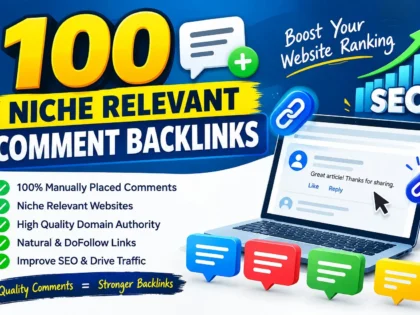
- I Will Build Niche Relevant Comment Backlinks Manually for Your SEO Strategy Verified Hot Zinner Zinner Level 1100 manually created niche-relevant comment backlinks. I will place your links on relevant blogs and websites to help improve your backlink profile…
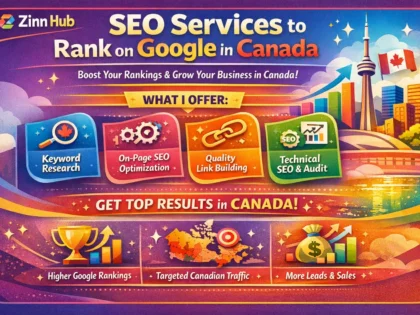
- do SEO services to rank on google in canada Verified Trusted Zinner Hot Zinner Zinner Level 4This plan is best suited for the Local business who want to rank within a city | Top Australian SEO featured on…
- I Will Provide High DA Backlink Services for AI SEO Link Building and GEO Rankings Verified Hot Zinner Zinner Level 2🤖 Next-Gen AI Search Engine Visibility with Generative Engine Optimization (GEO) Search engine optimization is undergoing a massive shift. Modern AI search…
- I Will promote your AI SaaS, app, IPTV, or game via targeted Reddit SEO posts management Verified Zinner Level 1Get your AI SaaS product, IPTV service, app, or game in front of the right Reddit audience through organic SEO posts, subreddit…
- I Will Build 1,000+ Niche-Relevant Crypto and Blockchain Dofollow Backlinks for SEO Verified Zinner Level 1Build a stronger online presence with 1,000+ high-quality blockchain and crypto backlinks designed to support your SEO strategy. Get niche-relevant link building…
- I Will optimize your website and Google Business Profile for local SEO Verified Zinner Level 1I optimize your website and Google Business Profile to build a stronger local SEO foundation, improve search visibility, strengthen relevance, and create…
- do monthly SEO services for your website Verified Trusted Zinner Hot Zinner Zinner Level 4Keyword Performance Review, Technical Health Check, 1 Blog Post | Proven partner to SMBs and Fortune 500 for SEO and PPC






Types of Japan SEO Services Available
The work Japanese SEO specialists most often list.
Japanese Keyword Research
Technical SEO Audits
Yahoo! Japan Visibility
Japanese Content and Copy
hreflang and International SEO
E-Commerce SEO
Core Web Vitals
Monthly SEO Management
The Complete Guide to SEO for the Japanese Market
What actually differs about ranking in Japan, and what to brief.
Two Search Engines, One Index
Google takes most Japanese search, but Japan is one of a small number of developed markets where a second engine still matters commercially. Yahoo! Japan is a separate company from Yahoo elsewhere and has served Google organic results under licence for years. So you do not run two ranking strategies, but nor can you ignore Yahoo! Japan.
What differs is everything around the ten blue links. Yahoo! Japan is a portal first, carrying news, shopping, auctions and a long-running question-and-answer community. Those properties take space on the results page, so a specialist will tell you when a query is winnable in organic and when an aggregator owns the intent and you should be listed there instead. Paid search is genuinely separate — Yahoo! Japan runs its own advertising platform — so budget it as a second buy.
Three Writing Systems, One Keyword
This is the single biggest reason Japanese keyword research cannot be outsourced to a translation. Japanese is written with kanji (imported Chinese characters, carrying meaning), hiragana (a native phonetic script) and katakana (used mainly for imported loanwords), plus romaji for brand names. One concept can legitimately be written in two or three of them, and each spelling accumulates its own volume in the keyword tools.
A term that looks mid-volume may be the third-largest spelling of a head term, with the demand sitting under a variant you never exported. The variants differ in tone too: the katakana loanword usually reads as modern and marketing-facing, the kanji compound as formal. Good research runs in three steps — enumerate every variant, aggregate them into one demand figure, then choose which form the page uses in its title, headings and body. Ask a Zinner for that variant table, not just a ranked list.
Full-Width, Half-Width and Where Text Silently Breaks
Latin letters, digits and katakana each exist in a full-width and a half-width form: different code points, identical meaning. A product code, phone number or the letters SEO can be typed either way, by your team and by your customers. Search engines normalise most of it; your own systems often do not. Internal search misses a product because the catalogue stores half-width digits and the shopper typed full-width, and duplicate categories appear where a CMS read the two forms as different values.
Japanese also has no spaces between words, so segmentation is done by morphological analysis rather than whitespace: exact-match stuffing is pointless, and a natural sentence containing the term is understood. Normalising width across templates, feeds and internal search is unglamorous work with an outsized effect.
Long, Descriptive Queries and Modifier Intent
Japanese queries tend to run longer and more descriptive than their English equivalents, often close to a full phrase and frequently framed as a question. They also lean on a small, stable set of commercial modifiers: recommended, comparison, pricing, reputation, word-of-mouth reviews, free, how to choose, and the differences between.
Those modifiers map cleanly onto page types. A comparison modifier wants a real comparison table, not a sales page. A reputation modifier wants third-party evidence and is often served by aggregators, which tells you when to pursue a placement rather than a ranking. Building the architecture around modifier clusters, rather than translating your English structure, is usually where the traffic comes from — and where Japanese content writing and SEO stop being separable jobs.
Domains, Trust and the .co.jp Signal
.co.jp is restricted: available to companies registered in Japan, one per company. That is why it carries weight — users read it as evidence of a real registered domestic entity in a way a generic domain does not. .jp is open to far more registrants and is perfectly respectable. Neither is a direct ranking factor: plenty of brands rank well on a Japanese subfolder of a .com given a genuine Japanese site, correct hreflang and clear company details. With a Japanese entity, a .co.jp is a cheap trust win; without one, a subfolder plus a properly implemented international SEO setup keeps your existing authority working.
Mobile-First Behaviour and LINE
Japan is a phone-first search market and the bar is high: fast rendering on mid-range devices, generous tap targets, one-handed forms, and Core Web Vitals that hold up on a real network rather than in a lab test. Commission that first — see the available Core Web Vitals and technical SEO Zinners.
LINE is not a search engine, but ignoring it loses traffic you already paid to earn. It is very widely used as a messenger in Japan, so a great deal of link sharing happens inside it and shared links routinely open in its in-app browser. That makes your title tag, meta description and share image the actual click decision, and in-app rendering a real testing surface.
Japanese UX: Density Reads as Trust
Japanese commercial pages are, by Western standards, information-dense: long, heavily sectioned and thorough on specifications. That is a convention, not a fault to correct — a complete page is a trustworthy one, and a minimal page with three sentences and a hero image reads as a draft. Trust signals are explicit and expected: a company profile carrying the registered address, the representative, incorporation details and a real contact route. For anything transacting online, the required commercial-transactions disclosure is a credibility item as much as a compliance one. Expect your Japanese pages to run longer than your English ones.
Why a Literal English-to-Japanese Keyword Map Fails
All of the above compounds into one conclusion. Hand an English keyword list to a translator and you get grammatically correct Japanese that describes your service accurately and that nobody searches for. The head term is frequently not the translation of the English head term. Loanword and native word compete, and which wins is industry convention rather than logic. Volume splits across scripts, and intent can invert: a query that is transactional in English can be research-stage in Japanese.
The correct process runs the other way round: start with Japanese-language research and autocomplete, build the demand map natively, cluster it by modifier intent, then map those clusters back to your English pages. Translation comes last, applied to briefed and structured copy — never first, applied to a keyword list. If you already run South Korea SEO or China SEO programmes the same discipline applies, but the research does not transfer.
Related Services and Nearby Markets
Language work. Pair search with Japanese translation, Japanese localisation and content writing, or multilingual SEO for multi-market hreflang.
SEO disciplines. Browse SEO services, the technical SEO marketplace, keyword research, local SEO, link building or the full search engine optimisation category.
Nearby markets. China content writing, South Korea content writing, Singapore SEO, Thailand SEO, Vietnam SEO, India SEO, Philippines SEO, or the locations hub.
Already hiring in Japan? See how Zinn Hub compares as a Coconala alternative, a Lancers alternative or a CrowdWorks alternative.
Getting Started on Zinn Hub
Start narrow. A Japanese keyword map plus a technical audit is a small first order that tells you whether the market is winnable before committing to a content programme. From there the sequence is technical remediation, a modifier-clustered content build, then off-page work. Compare Zinners on Japanese-market evidence rather than generic SEO claims.
Typical Pricing for Japan SEO Services
Typical marketplace ranges in USD across independent Zinners — not a Zinn Hub price guarantee. Each Zinn shows its own price.
Audit and Keyword Map
Technical audit, Japanese keyword research with script variants consolidated, competitor and results-page analysis
Monthly Japanese SEO
Ongoing optimisation, Japanese content briefs, on-page work, link acquisition and monthly reporting
Market-Entry Programme
Full Japanese site strategy, hreflang and domain planning, content architecture and implementation
How to Hire Japanese SEO Specialists
Three steps, with your payment protected.
Browse Specialists
Search Japan SEO and related skills, then check each Zinner’s stated Japan base on their profile. Compare scope, USD pricing and verified reviews.
Brief and Discuss
Message the Zinner about your domain, target queries, whether you need Yahoo! Japan coverage, and how the Japanese copy will be produced.
Hire with Protection
Order and pay securely. Funds stay in escrow and are released only once the work is delivered and you confirm it meets your specification.
Zinns
- enhance traffic and sales with monthly SEO services Verified Trusted Zinner Hot Zinner Zinner Level 4Keyword Research (5-10) 1 pages On-Page & Off-Page SEO Product/Service Monthly Report | Own the Digital Space with DIGIOWN
- I Will Build High Authority DA DR TF 50+ Sidebar Blogroll Backlink Services for SEO Ranking Verified Hot Zinner Zinner Level 2🚀 Boost Your Search Engine Visibility with High-Authority Blogrolls Standard contextual links inside buried blog posts often lack the continuous authority needed to move competitive keywords to top…
- I Will Manage a 7-Day Reddit SEO Marketing Campaign for Your Business or Website Verified Zinner Level 1Get your business discovered with a focused 7 day Reddit SEO marketing strategy. I’ll research relevant subreddits, keywords, audiences, and content opportunities, then create natural, discussion driven posts…
- I Will Build 1000+ Germany .DE Domain Backlinks for German SEO and Link Building Verified Zinner Level 1Boost your German SEO with 1000+ Germany-based .DE backlinks from high-authority domains. Strengthen your website’s domain authority, link profile, rankings, and visibility in Google Germany with targeted German…
Zinn Categories
Freelancers
- Tamoor SEO Verified Partner Available now Verified Trusted Zinner Hot Zinner Zinner Level 3SEO Specialist | PBN Backlinks & Authority Link Building Expert for High-Competition Niches
- FirstSeo Verified Available now Verified Zinner Level 1SEO Specialist | Link Building | GSA SER | Technical SEO | E-commerce SEO
- Syed ibrahim khalil ullah Verified Available now Verified Zinner Level 1Professional On-Page & Off-Page SEO Expert | High Authority DoFollow, Web 2.0 & Social Profile Mixed Links |…
- Rise Ranker Verified Available now Verified Zinner Level 1Rise Ranker SEO Agency | Professional SEO Services Since 2018




Sellers
- zinn digital® Verified Trusted Zinner Hot Zinner Zinner Level 4Welcome to Zinn Digital®, the team behind Zinn Hub itself. With years of experience in web development, SEO, and digital marketing, we don't just build platforms – we…
- SEO MASTER Verified Hot Zinner Zinner Level 1Welcome to my SEO and Link Building Store! I specialize in providing high-quality SEO services designed to help websites improve their online presence and search engine visibility. With…
- spatialecomm_llc Verified Zinner Level 1Who Am I? I'm Lawal Uthman a business marketing llc specialist with 3 years of hands-on experience helping businesses, brands and creators grow through strategic Reddit marketing, Social…
- AGC Agency Verified Zinner Level 1I help businesses and website owners improve their search engine rankings through high-quality, white-hat backlink building strategies. With expertise in off-page SEO, I specialize in acquiring authoritative, niche-relevant…




Articles
Help
- How To Add A Support Agent or Other Zinners To Your Zinn …es. For example, if you offer SEO services and another Zinner offers web development, you could create a Zinn that covers both, assign the developer as a support…
- How to Create a Zinn (Service Listing) …DA dofollow backlinks” beats “SEO services”), up to 3 categories , relevant skills/tags , the service type (one-time or subscription), and an AI-usage declaration (whether you use AI…
- Understanding Zinn Hub Terminology …"As a Zinner, I specialise in SEO services."* Zinnector A Zinnector is a buyer or client on Zinn Hub. Zinnectors browse and purchase Zinns from Zinners. *Example: "The…
- Creating & Selling Your Digital Services on Zinn Hub What Can You Sell on Zinn Hub? Almost anything digital. Zinn Hub supports an incredibly diverse range of freelancer services across every industry imaginable. Here are just some…
Frequently Asked Questions
Common questions about hiring SEO specialists for Japan.
Japanese SEO depends on what a translated brief cannot supply: keyword research across kanji, hiragana and katakana, an understanding of how Yahoo! Japan sits alongside Google, and Japanese trust conventions. Japan-based Zinners bring first-language query knowledge and copy that reads as native rather than translated.
In practice yes. Yahoo! Japan serves Google organic results under licence, so strong Google rankings usually carry across. But it is also a portal whose news, shopping and question-and-answer properties take space on the results page. Plan the technical work once and the visibility strategy for both.
A literal translation produces grammatical Japanese that nobody searches. The same concept is written in kanji, hiragana, katakana and sometimes romaji, loanwords compete with native words, and searchers attach modifiers for comparison, pricing and reviews. Volume has to be rebuilt from Japanese-language research and consolidated variant by variant.
No. A .co.jp is not a ranking requirement, but it is restricted to companies registered in Japan, one per company, so users read it as a strong trust signal. A .jp is open to far more registrants, and many brands rank well on a Japanese subfolder of a .com with correct hreflang.
Yes. Japanese search is heavily phone-led, so mobile rendering, tap targets and Core Web Vitals decide whether a ranking turns into revenue. LINE is not a search engine, but a great deal of link sharing happens inside it, so pages are routinely opened in its in-app browser.
Typical marketplace ranges run from about $150 to $500 for an audit and Japanese keyword map, $400 to $1,500 a month for ongoing optimisation, and $1,500 upwards for a full market-entry programme. These are observed ranges across independent Zinners, not a Zinn Hub guarantee.
Yes. As the Zinnector, your payment is held in escrow until the work is delivered and you confirm it meets the agreed specification; on the seller side, the Zinner's share is released at checkout. Zinners are ID and skill verified, reviews come only from confirmed purchases, buyers pay no platform fee, and you can pay with over 100 methods including card, PayPal and cryptocurrency.
Explore More Japan SEO Services Options
Discover related services, locations, and alternatives on Zinn Hub