

Table of Contents
Twitter vs. X: what do returning users need to know? Well, let me tell you what I’ve learnt. I used to live on Twitter. Not in a “chronically online” way (okay, a little), but in a “this platform pays the bills” way. I ran multiple viral accounts for clients, built startup X accounts that went viral, built audiences fast, and learnt the unwritten rules of distribution: timing, voice, community, momentum, and the whole thing.
Then I took a break from social media marketing to focus on web development and SEO.
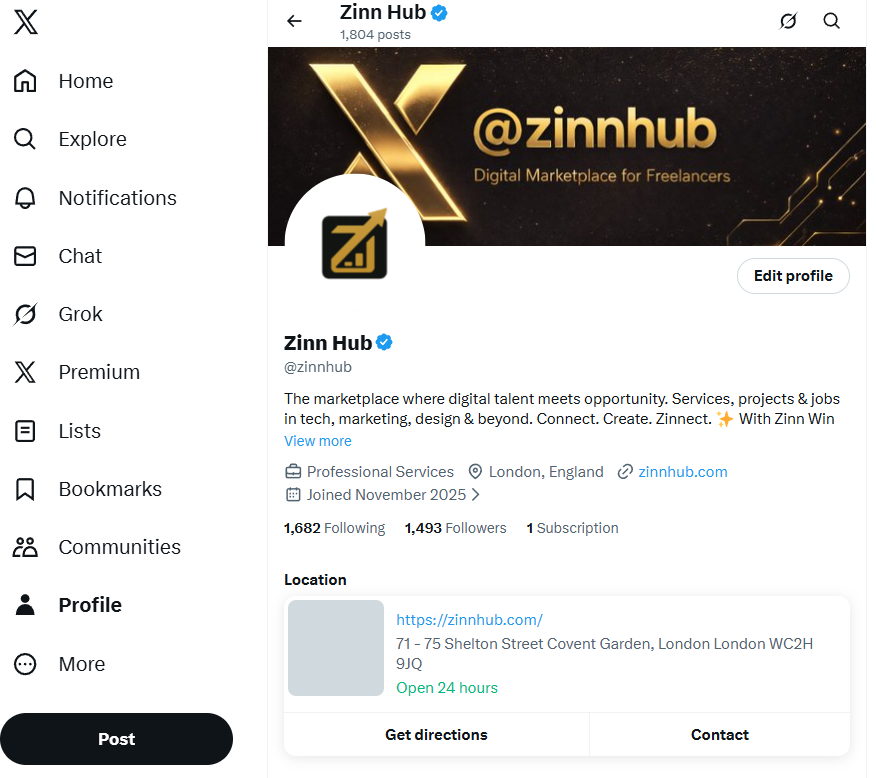
However, when I came back in late 2025 to build @zinnhub, I discovered something important:
Twitter and X are not the same game anymore! Same app. Same little bird-shaped muscle memory in my thumb. Totally different ecosystem.
This isn’t a “back in my day” rant. It’s more like a walking into your old local pub and realising it’s now a co-working space that sells protein shakes.
Here’s what I learnt as a “newbie” returning to X.
1) The Big Shift: From Social Graph to Incentive Graph
Twitter used to feel like a messy town square. You’d post something smart or funny, someone would quote it, people would talk, and suddenly you’d accidentally created a small cultural event.
X still has the town square, but it’s like someone installed a casino in the middle of it.
A lot of behaviour now feels optimised for incentives rather than relationships:
- Replies designed to be seen, not to connect
- Opinions shaped for engagement, not truth
- “Content” that feels like it was assembled on a conveyor belt
- The subtle sense that many accounts are building income streams, not communities
I don’t blame individuals. I can’t really blame incentives either. Platforms shape behaviour. And look, I’m a marketer, so I respect optimisation! I have spreadsheets. I own too many tabs. So, I’m not judging the hustle at all. But it changes the vibe.
It feels less like, “Let’s talk.” And more like, “Let’s perform… at each other.”
2) Follow-for-Follow Is Alive and It Has Commitment Issues
I need to talk about follow-for-follow. Because it’s not just happening. It’s happening with a level of confidence I can only describe as “people who wear sunglasses indoors”.
Here’s how I operate: I follow back everyone who follows me – verified or not. I also proactively follow accounts in niches related to my work at Zinn Hub: freelancers, developers, designers, marketing, and tech, etc. I’m not precious about it.
But here’s the pattern I kept seeing:
Someone follows you. You follow back. 72 hours later: you’re single again. It’s the digital equivalent of handing someone your business card and watching them quietly throw it away on Thursday.

When X analytics flags that someone’s unfollowed me, it’s easy enough to find out who – just time-consuming. I check my “following” tab and do some detective work. If I’m following a designer who isn’t following me back? That’s fine. I followed them for the content.
But when I’m following a crypto account who isn’t following back – and I know I didn’t seek them out – that’s when the picture becomes clear. The giveaway? Their profile now shows “Following: 0” but they’ve got 2,000 followers.
That’s the trick. Mass follow, wait for the follow-backs, then purge. Rinse and repeat until the ratio looks impressive. So, it’s not networking. It’s a numbers trade. And it creates a weird emotional ecosystem where you’re not building an audience – you’re managing a churn rate.
Follow-for-follow can make your analytics look good short-term, but it teaches you the wrong lesson:
Attention rented is attention returned. Usually… after a few days!
I was committed and dedicated to building followers for Zinn Hub on X and it became addictive. But I learnt a hard lesson quickly! X likes slow and natural growth. According to the algorithm, my dedication resembled a Bot! So X put Zinn Hub on a 3-day restriction, where I could only follow and like in a limited fashion.
3) There’s Engagement But Not Always Connection
This part surprised me the most! Because there’s activity everywhere. Posts flying by, people replying, quote tweets, threads, hot trends. On paper, it looks alive.
But when you’re in it day-to-day, you notice something:
A lot of engagement doesn’t feel like conversation. It feels like… competitive commenting.
You’ll get replies that technically count as engagement but emotionally count as:
- Someone trying to be the main character under your post
- Someone asking for a follow for follow
- Someone farming visibility with a semi-related opinion
- Someone doing the digital equivalent of shouting “THIS!” and leaving
- Someone arguing with a version of your point you didn’t make
Again, not all of it. There are plenty of great people still on X! But the overall texture has changed.
I found myself thinking:
“I’m getting impressions, but I’m not building relationships.” And as a marketer, that’s a big difference – because relationships are what compound.
Here’s a small thing that says a lot: I retweet people regularly. Good posts, smaller accounts – I want to support the freelancers. In the Twitter days, you’d often get a quick “Thanks for the RT!” – a small acknowledgement that someone noticed you’d chosen to amplify their voice or service.
Now? Almost never, and that is what shocked me!
It’s not rudeness. It’s that a retweet has become just another number ticking upward, not a person choosing to share your work with their audience. The human element has faded into the metrics.
4) I Had to Re-Learn the Platform (And Swallow My Ego a Bit)
Here’s my honest confession: I assumed I’d come back and immediately cook.
I’ve done this many times before. I know how virality works. I know how to write. I know what a hook is. I know how to build a brand voice.
And yes – those skills still matter!
But X in late 2025 often rewards different instincts:
- More repetition
- More polarisation
- More “say the obvious thing loudly”
- More content designed to trigger a reaction rather than start a discussion
If old Twitter was “Make people feel something,” X sometimes feels like, “Make the algorithm feel something.”
Which is less poetic. But probably more accurate?
5) The Rise of AI and Bots in the Timeline
One more thing that caught me off guard: AI is everywhere now – and not just in obvious ways.
You’ll see Grok summaries under posts, AI-generated images in replies, and sometimes entire conversations that feel… slightly off. Like talking to someone who read the room but didn’t quite live in it.
And then there are the X bots.
They’re not new, but they feel more sophisticated now and more numerous. Accounts that look real and post regularly even have profile photos and bios that pass a quick glance. But the replies are generic, the timing is suspiciously consistent, and if you check their engagement patterns, something doesn’t add up.
It makes you second-guess interactions! That new follower who liked three of your posts – is it genuine interest or automated outreach? That reply agreeing with your opinion, is it a real person or a bot padding engagement metrics?
It’s not all bad – @Grok can be genuinely helpful – but it adds another layer to the “performance” vibe. Sometimes you’re not sure if you’re engaging with a person or a very confident language model. I actually had some very useful behind-the-scenes chats with Grok, who helped me navigate X and the changes from Twitter.
There’s still real community here – it just takes more intention to find. And I think X users are sceptical of the newbie accounts, and rightly so!
6) The Trap: Building for Monetisation Instead of Meaning
I don’t think monetisation is bad. Creators being paid is a good thing! But it changes the incentive structure.
When monetisation becomes the primary goal, the platform starts to fill with behaviour like:
- Reply bait
- Manufactured outrage
- “Engagement loops” that never end
- Accounts that act like humans, but post like vending machines
- And I repeat again the follow for follow
You start seeing the same posts cycle through your feed over and over: “Give me an old-fashioned girl’s name.” “Tell me a country that doesn’t have the letter ‘E’ in it.” “What’s a movie everyone loves but you hate?”
At first I thought I was just seeing reposts but I wasn’t. These were different accounts, posting the exact same prompts (word for word) because they’d seen it work for someone else. Why create when you can copy? Why take a risk on an original thought when a stolen engagement-bait question is a guaranteed win?
It’s content as a template. Creativity as a numbers game. And if you’re returning after a break, you can feel it quickly – especially if your instinct is to build real community like Zinn Hub.
The risk is that you either:
- Start copying the vibe to keep up, or
- Get discouraged and stop posting
Neither is ideal.
So I started asking a better question:
How do I grow on X without becoming someone I wouldn’t follow?
7) What I’m Doing Differently Now (My “Newbie” Playbook)
After a few weeks of testing, I landed on a strategy that feels both effective and human.
I toned down chasing “growth tricks”
I added my username and allowed others the option to follow me. But I stopped following everyone I could, just to get a follow back. Follow-for-follow, spammy tactics, empty posting – it’s like sugar for Zinn Hub. Quick hit, no nutrition.
I started building relationships intentionally
Instead of trying to appeal to “everyone”, I picked a small cluster of active users I found interesting on a personal note (here I will give @brockpierson a shoutout! for his humour) and freelancers in my niche and actually showed up:
- Thoughtful replies
- Useful add-ons
- Occasional humour (as a treat)
- Consistency over intensity
- Reposting their amazing content
This still works. It’s slower than hacks, but it compounds. Whilst the lack of engagement is still there and the lack of “thank you”, slowly but surely the freelancers are following back. I genuinely feel a Zinn Hub community will build in time! Patience is the key.
I focused on content with a point of view
Not hot trends. Not rage bait. Not “10 lessons I learned at 4am.”
More like:
- “Here’s what I tried, here’s what happened, and here’s what I’d do differently.”
- “Here’s a freelancer that deserves attention!”
- “Here’s the marketing truth no freelancer wants to hear,” said gently.
- Look at this great blog from the Zinn Hub website!
- Here’s a great digital services advert from Zinn Hub!
A simple posting rhythm that doesn’t fry your brain
- 1x/week: an “anchor” post (lesson, case study, strong viewpoint)
- 2–3x/week: tactical, specific tips
- Most days: replies that build familiarity and trust
- Every day: repost a genuine freelancer who is working hard
Replies are still underrated. They’re not glamorous, but they’re where the relationships live.
Be the exception! Thank people for retweets. Acknowledge shares. Reply like a human. Advertise the great work you do and be confident about it. It stands out now precisely because so few people bother.
You Can Still Win on X – But Define “Win” First
X isn’t dead. It’s just different from Twitter.
It’s louder, more transactional, and more incentive-driven than the Twitter I remember. That can make it feel shallow, especially if you’re coming back expecting the old rhythm. But if you treat it like a place to build trust (not just numbers), there’s still real opportunity here!
My biggest lesson as a returning “newbie” is this:
If you optimise only for metrics, you’ll meet people who optimise only for metrics. And then you’ll wonder why it feels empty.
So I’m choosing a slower, sturdier approach:
Building real connections with especially the freelancers but also those accounts that are active and real. Posting things that mean something to the Zinn Hub community. Letting growth be a side effect – not the whole point.
And yes, I still check my follower count and engagement rate on X analytics. After all, I’m only human.