Table of Contents
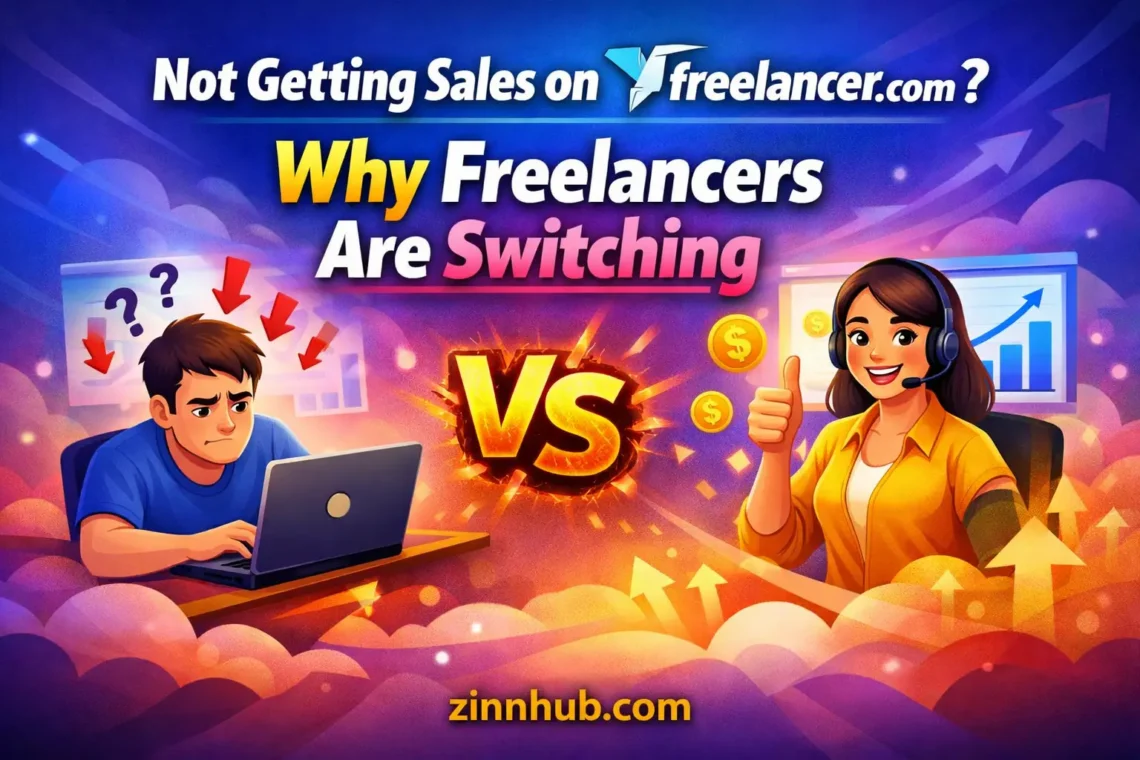
You’ve been bidding on projects on Freelancer.com for weeks — maybe months. You write thoughtful proposals, price competitively, and have genuinely strong skills. But you keep losing to freelancers who bid lower, have more reviews, or simply got their proposal in before yours. Your win rate is hovering near zero, and the Connects (or equivalent bid credits) you’re spending feel like money thrown into a void.
If Freelancer.com isn’t generating income for you, understanding why will help you decide whether to double down or redirect your energy somewhere it’s more likely to pay off.
Why Freelancer.com’s Model Fails Most Sellers
The Bidding War Problem
Freelancer.com’s core model is competitive bidding. A client posts a project, and freelancers submit proposals with their price and pitch. The client then chooses from the pool of bidders.
This model has a fundamental flaw: it incentivises a race to the bottom. When 30 freelancers bid on the same project, the client’s easiest filtering mechanism is price. Lower bids get more attention, which drives all prices down. Professional-rate freelancers are consistently undercut by those willing to work for less.
For new freelancers without established reviews, the pressure to bid low is even more intense. You’re competing against sellers with hundreds of reviews on price AND reputation — a battle you can’t win on either front.
Contest Model Exploitation
Freelancer.com’s contest feature is particularly problematic for sellers. Clients post a design contest, dozens of freelancers submit work, and only the winner gets paid. This means you might spend hours creating a custom logo, website mockup, or illustration — and earn absolutely nothing because someone else’s submission was selected.
The contest model effectively gets free work from every participant except the winner. For new freelancers hoping to build a portfolio through contests, the economics are terrible.
Reputation Advantage for Established Sellers
Freelancer.com’s ranking and recommendation systems naturally favour profiles with extensive project history, high earnings, and positive reviews. Clients filtering by “Top Rated” or sorting by reputation automatically exclude new sellers.
Membership tiers (Free, Basic, Plus, Professional, Premier) add another layer. Higher-tier memberships unlock more bids, better visibility, and priority support — but they cost money. You’re essentially paying for the right to compete more aggressively in an already unfavourable system.
Geographic Price Competition
Freelancer.com’s global marketplace means you’re competing with freelancers from countries with dramatically lower costs of living. A web developer in London who needs to charge $50/hour to cover expenses is competing against equally skilled developers in South Asia who can profitably charge $10/hour. This isn’t a reflection of quality — it’s a reflection of economics. But the bidding system doesn’t distinguish between the two.
Project Quality Issues
Many of the projects posted on Freelancer.com are low-budget, poorly specified, or from clients with unrealistic expectations. Experienced freelancers learn to avoid these projects, but new sellers often take them out of desperation — leading to difficult clients, scope creep, disputes, and negative reviews that further damage their ability to win better projects.
The Real Cost of Freelancer.com’s Bidding Model
Beyond the direct costs (bid credits, membership fees, commission), there’s an opportunity cost that most freelancers don’t calculate:
- Time spent writing proposals: 15-30 minutes per bid × 20-40 bids per project won = 5-20 hours of unpaid proposal writing
- Time spent on contests you don’t win: 2-5 hours per contest × 80-90% loss rate = dozens of hours of free work
- Emotional cost: Constant rejection erodes confidence and motivation, making you less effective when opportunities do arise
- Pricing pressure: Underpricing to win bids means even successful projects generate below-market income
If you redirected those hours into building a strong service listing on a platform with better visibility mechanics, the return on your time would be dramatically higher.
When to Stop Trying on Freelancer.com
There’s no shame in recognising when a platform isn’t working for you. Consider switching if:
- You’ve sent 50+ proposals and won fewer than 3 projects
- Your average bid price is below what you need to earn sustainably
- You’re spending more on Connects/membership than you’re earning
- Your time writing proposals exceeds your time doing paid work
- You keep losing contests and getting nothing for your effort
These aren’t signs that you’re a bad freelancer. They’re signs that the platform’s model doesn’t work for your situation.
A Better Model Exists
The alternative to bidding for every project is creating service listings that buyers find and purchase directly. This is how Zinn Hub works, and it fundamentally changes the economics of freelancing.
How Zinn Hub Differs from Freelancer.com
- No bidding — Create your service listings once. Buyers browse service categories and marketplace pages to find and purchase directly. No writing proposals, no competing against 30 other freelancers per project
- Fair visibility from day one — Rotation-based recommendation emails include every seller. New accounts get the same promotional treatment as established ones. No algorithm burying your listings
- AI-powered listing creation — The Zinn Creation Wizard helps you build listings that convert, with AI quality checks on every element
- Cryptocurrency payments — Accept USDT, USDC, and other crypto. Freelancer.com doesn’t offer this
- Lower fees — Keep more of each payment without the layered fee structure of Freelancer.com’s commission + membership + bid credits
- No contests — You don’t work for free. Every order is a paid engagement with escrow buyer protection
Migrate Your Professional History
Zinn Hub’s free migration service transfers your Freelancer.com reviews, service descriptions, and FAQs to your new profile. Your existing reputation comes with you.
Setting Up for Success on Zinn Hub
- Create your free account — No membership fees, no bid credits to purchase
- Migrate for free — Bring your Freelancer.com reviews and listings
- Build optimised listings — Use the AI wizard and sell-services guides
- Price for profitability — Use the income calculator to set rates that meet your goals, not rates driven by bidding war desperation
- Plan your growth — Map out your first 3-6 months with the earnings planner
Tools That Give You an Edge
- AI Image Generator — Create professional listing visuals without additional cost
- Video Call Platform — Built-in video for consulting and coaching services
- Multiple discovery channels — Buyers find you through search, categories, marketplaces, locations, and AI matching — not just one algorithm
Take Back Control of Your Freelance Career
The bidding model puts you at the mercy of every other freelancer bidding on the same project. The listing model puts you in control — you set your price, define your offering, and let the platform bring buyers to you.
Join Zinn Hub for free and stop paying to chase projects. For a side-by-side comparison, see our Zinn Hub vs Freelancer.com page or read the complete switching guide.
If your Freelancer.com account has been suspended, see our guide on what to do when you’re banned from Freelancer.com.