
Table of Contents
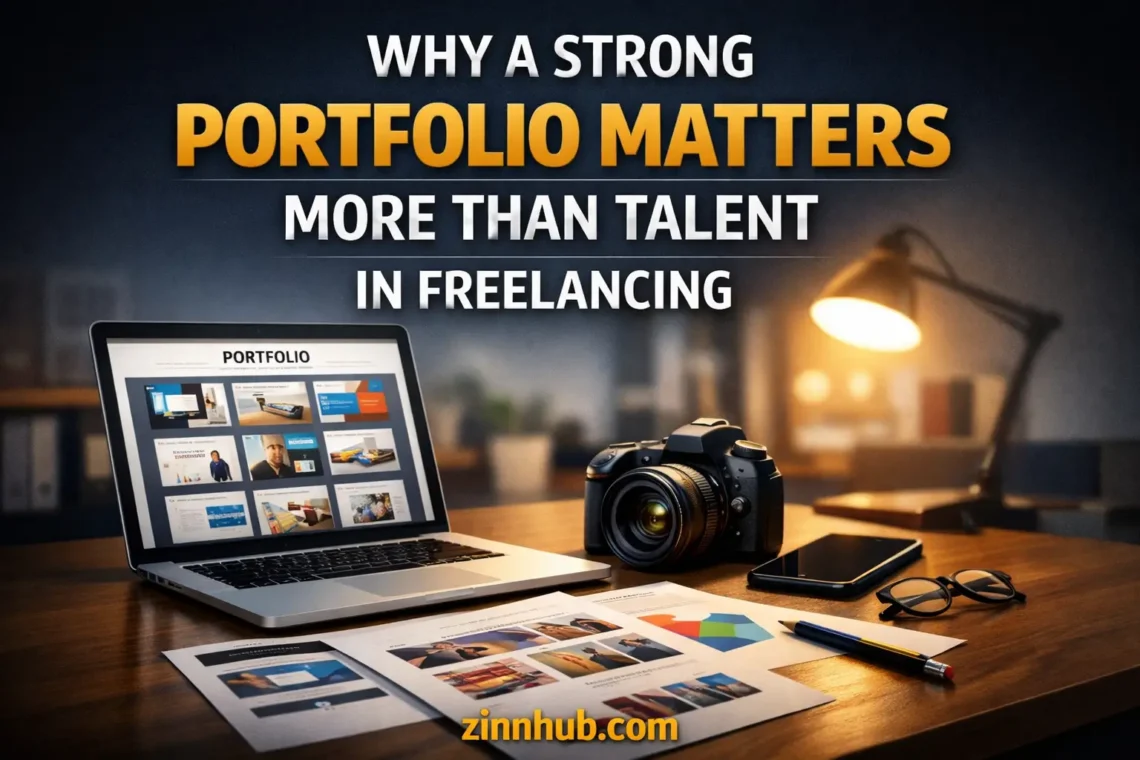
Your portfolio is the single most important factor in whether a potential client hires you or moves on to the next freelancer. It’s not about quantity or flashy presentation — it’s about demonstrating, in concrete terms, that you can solve the specific problem the client is facing. Here’s how to build one that actually converts visitors into paying clients, even if you’re starting with zero completed projects.
What Clients Actually Look for in a Portfolio
Most freelancers build portfolios around what they want to show. The problem is that clients evaluate portfolios through a completely different lens. They’re asking three questions: “Have they done work similar to what I need?”, “Did that work produce results?”, and “Do I trust this person to deliver on time and communicate well?”
The strongest portfolios answer all three questions within 30 seconds of landing on the page. Relevant examples up front. Measurable outcomes attached to each project. Testimonials or reviews that speak to professionalism and reliability.
Building a Portfolio From Nothing
Spec Projects
Create work for fictional or real businesses without being hired to do so. A web designer might redesign a local restaurant’s website. A copywriter might write a complete email sequence for a hypothetical SaaS product. A graphic designer might create a brand identity for an imaginary startup. The key is making the work indistinguishable from client work in terms of quality and thoughtfulness.
Personal Projects
Your own website, blog, or side project demonstrates your skills directly. An SEO freelancer whose own website ranks well for relevant keywords has automatic credibility. A developer whose personal projects are well-coded and functional provides tangible proof of ability.
Pro Bono Work
Offer your services to a charity, community organisation, or early-stage startup in exchange for a portfolio piece and testimonial. This creates real client work with real outcomes — just at a reduced or zero fee. Limit this to two to three projects; beyond that, you’re establishing a pattern of free work rather than building a portfolio.
Marketplace Profiles
Platforms like Zinn Hub function as living portfolios. Each completed project, client review, and service listing adds to your credibility. The advantage over a static portfolio website is that marketplace profiles include verified reviews and real transaction history, which clients trust more than self-reported testimonials.
Portfolio Structure That Converts
Lead With Your Best Work
Feature three to six of your strongest, most relevant projects prominently. Quality over quantity, always. Ten mediocre projects are worse than three excellent ones. For each featured project, include the client’s challenge or brief (what they needed), your approach (what you did and why), the outcome (measurable results wherever possible), and a visual or link to the finished work.
Organise by Service Type
If you offer multiple services, organise your portfolio so visitors can quickly find relevant examples. A web design freelancer might categorise by “WordPress sites,” “eCommerce,” and “Landing pages.” An SEO freelancer might separate “Technical SEO audits,” “Content campaigns,” and “Link building results.”
Include Measurable Results
Numbers are more convincing than descriptions. “Redesigned homepage that increased conversion rate by 34%” is dramatically more compelling than “Redesigned client homepage with modern design.” Track results for every project and ask clients for permission to share performance data.
Add Testimonials Contextually
Place client testimonials alongside the relevant project rather than on a separate testimonials page. This creates immediate reinforcement: the visitor sees the work and the client’s endorsement in the same view.
Portfolio Platforms and Options
You don’t need a custom website from day one. Marketplace profiles on platforms like Zinn Hub serve as effective portfolios with built-in trust signals. Behance and Dribbble work well for designers. GitHub is essential for developers. A simple personal website (even a one-page site) gives you full control over presentation and SEO.
The best approach is often a combination: a marketplace profile for discovery and trust, plus a personal site for detailed case studies and long-form portfolio pieces.
Keeping Your Portfolio Current
A portfolio with projects from three years ago tells clients you’ve either stopped working or stopped caring about presentation. Update quarterly at minimum. Replace older work with newer, stronger examples. Add new testimonials and results data as they come in. Remove anything that no longer represents your current skill level.
Enter Zinn Hub competitions through the competition page to create showcase-worthy work and gain visibility in the community.
Frequently Asked Questions
How many portfolio pieces do I need?
Three to six strong, relevant pieces is the sweet spot for most freelancers. More than eight starts diluting impact unless each piece is exceptional. Quality and relevance matter infinitely more than quantity.
Can I include work from my full-time job?
Check your employment contract first — some employers retain rights to work produced during employment. If permitted, include it. If not, describe your role and contributions in general terms without showing the actual deliverables.
Should my portfolio be on my own website or a platform?
Both, ideally. A marketplace profile provides trust and discovery. A personal website gives you full control and SEO benefits. Start with whichever is fastest to set up, then add the other when time allows.
What if my client work is under NDA?
Describe the project in general terms: industry, challenge, approach, and anonymised results. “Increased organic traffic by 200% for a B2B SaaS company” conveys competence without revealing confidential details. Alternatively, create spec projects that demonstrate similar skills.