
Table of Contents
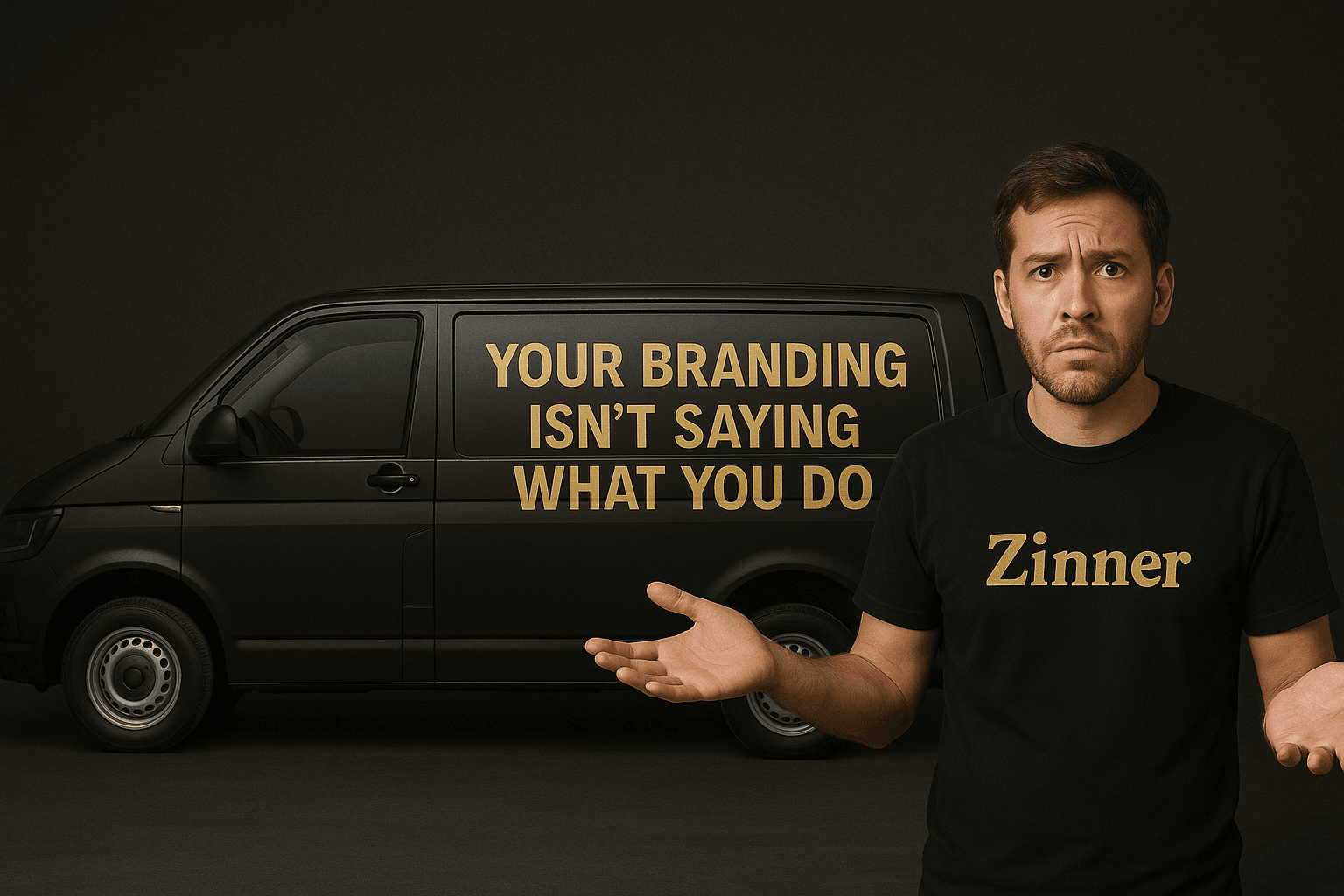
I was driving down the M60 through Manchester today when a sleek van overtook me. The branding caught my eye — glossy paint, smart typography, and a bold logo. Even the phone number was front and centre. It looked like a serious company. Polished. Professional.
But I had no idea what they actually did!
Plumbing? Catering? Logistics? Marketing? It could have been any of them. I honestly couldn’t tell.
I chuckled to myself and thought sarcastically, “Does anyone actually ring these numbers just to figure out what the business does?” No. They keep driving — and forget you existed.
That got me thinking more. Because as I drove on, I noticed more vans of various sizes with beautiful designs but no clear business message or brand clarity. All style, no substance. No clue whatsoever what the business was offering.
And then it hit me: this doesn’t just happen on the road. It’s everywhere online too.

🌐 The Digital Version: Beautiful Websites That Say Nothing
You’ve probably been there. You click on a link—maybe from a search or a social post—and land on a stunning website. Great colours. Clean design. It looks impressive.
But what do they actually do?
You start digging through vague mission statements and corporate-speak:
- “We empower global change.”
- “We drive innovation at scale.”
- “Transforming tomorrow’s digital experience”
Still no answer.
Nothing that tells you:
👉 “We install solar panels throughout England.”
👉 “We create online shops for local businesses.”
👉 “We offer proofreading services for students.”
If your customers have to guess what you do, you’ve already lost them.

🧠 Why Your Brain Rejects Unclear Brands
When people land on your site (or see your business van), their brain makes snap judgements—often in less than a second.
It’s about survival. Psychologists call this cognitive load: the mental effort it takes to make sense of something. If the brain has to work too hard to figure you out, it defaults to “not worth it.”
On the flip side, there’s cognitive ease—that sense of clarity and comfort when something is easy to understand. We trust things that are easy to process.
So if your message is clear and direct, people are far more likely to trust you and stick around.
🧠 Quick Fact: Most visitors decide whether to stay on a web page within 15 seconds. Clear messaging can increase conversions dramatically.

💸 The Real Cost of Confusing Branding
Vague or overcomplicated branding isn’t just a style issue—it costs you money:
- People leave. If they don’t get what you do straight away, they’ll click away or move on.
- You waste your budget. That great website or van design won’t convert if the message is missing.
- Opportunities are missed. Someone might need exactly what you offer but won’t realise you offer it.
- Referrals break down. Even your fans won’t know how to recommend you.
🧱 Step One: Know What Matters Most
Let’s start with the basics. Here’s the right order to build your messaging:
- What you do – Start here. Be specific.
- Who you help – Make it clear who you serve.
- Why you’re different – Give people a reason to choose you.
- Why you exist – Purpose is great—but only after the basics are clear.
Most companies start at the bottom. “Our mission is to empower entrepreneurs.” Great. But what do you do?
Now that you understand the priority order, here’s how to put clarity first.
✅ Step Two: Make It Clear Everywhere
Here’s how to apply that clarity:
- On your van:
Instead of “Anderson & Co.”
Say “Anderson & Co – 24/7 Emergency Electricians” - On your homepage:
Instead of “Driving digital transformation”
Say “We build fast, user-friendly websites for restaurants” - In your elevator pitch:
Instead of “We’re a solutions-focused growth consultancy”
Say “We help small shops save money on energy bills”
🧪 The Clarity Tests
Use these to check if your messaging works:
🕐 The 5-Second Test
Can someone understand your business in five seconds?
👵 The Gran Test
Can your gran explain what you do to her friend?
⛔ The Interruption Test
If someone cut off your elevator pitch halfway, would they still get the idea?
🚦 The Manchester Test
If I saw your van in traffic, would I know what you do?
Once you’ve clarified your priorities, here’s how to structure your core message.

🧩 The Complete Brand Clarity System
Here’s a quick formula you can use:
- Core service – What do you do?
- Target market – Who do you help?
- Main benefit – What’s the result?
- Proof – Why should they trust you?
Nail all four, and your message will resonate.

🔍 Industry Examples: Say It Better
Here’s how unclear jargon looks in the real world—and how to fix it:
- Tech
❌ “AI-powered business solutions”
✅ “We automate your invoicing with AI” - Consulting
❌ “Strategic optimisation partners”
✅ “We help restaurants reduce food waste” - Creative
❌ “Brand experience architects”
✅ “We design logos and websites for small businesses” - Legal
❌ “Full-spectrum legal consultancy”
✅ “Conveyancing and contract advice for start-ups”
💻 Case Study: How Zinn Hub Gets It Right
When you visit ZinnHub.com, the message is front and centre:
“Zinn Hub: Marketplace for digital services, jobs and projects.”
That one line tells you:
- What it is
- Who it’s for
- What you can do there
No guesswork. No fluff. Just clear, helpful information that lets people know they’re in the right place.

🧱 Beyond the Logo
Looks still matter. A polished logo and cohesive branding builds loyal trust.
But trust starts with understanding.
If people don’t get what you do, they’ll move on—no matter how good your brand looks.
You don’t need to choose between design and clarity. You need both. But clarity comes first.
Think of names like:
- Domino’s Pizza
- Kwik Fit Tyres
- Specsavers Opticians
You never have to guess what they do.
🧩Your Unique Value Proposition (UVP)
Even if your branding is polished and your message is mostly clear, there’s one line that often gets missed — and it’s a big one:
Why should someone choose you over anyone else?
That’s your Unique Value Proposition (UVP) — a short, sharp sentence that says:
- ✅ What you do
- ✅ Who you help
- ✅ What makes it valuable or different
If you’re vague, people won’t connect. If you’re clear, people remember.
❌ Vague:
“Full-service creative agency driving innovation across channels.”
✅ Clear UVP:
“We design logos, packaging and websites for food & drink startups — fast, affordable, and built to launch.”
❌ Vague:
“Digital transformation consulting for future-focused organisations.”
✅ Clear UVP:
“We help mid-sized UK retailers modernise their operations with custom automation and no fluff.”

🧠 Try This Formula:
[Service] for [audience] that [delivers benefit or solves a pain point]
Examples:
- “SEO services for small e-commerce brands — to help you outrank Amazon.”
- “Web design for therapists — calm, mobile-friendly sites that convert.”
- “Copywriting for fintech startups — clear, credible, conversion-focused.”
Put this line at the top of your site. On your LinkedIn marketing. In your email signature. On your Zinn Hub profile. Maybe even… on your van. 🚐
Because if people remember one thing about you, it should be exactly what you do, who it’s for, and why it’s worth their time.

🎯 Need Help? Find a Zinner Who Specialises in Brand Messaging
On Zinn Hub, we’ve got freelancers—called Zinners—who help businesses just like yours get clear.
Whether you need:
- A writer to sharpen your website
- A brand expert to refine your message
- A designer who aligns visuals with words
You’ll find someone ready to help.
👉 Find a branding expert on Zinn Hub

💡 Zinners — Make Sure Your Services Pass the Clarity Test Too
If you’re a freelancer offering services on Zinn Hub, this advice applies just as much to your profile as it does to the businesses you’re helping.
Ask yourself:
- Can someone tell what you offer in the first few seconds of visiting your profile?
- Is your service title clear and specific?
- Do you explain who you help, how you help, and why you’re worth trusting?
❌ Don’t say:
“Brand Strategy & Creative Direction”
✅ Say:
“I help small businesses create logos, taglines, and brand messaging that converts.”
You’re not just selling a service — you’re solving a problem. Make sure that’s obvious.
A clear pitch helps you win more work, get referred more often, and build long-term clients.

👇 Natalie’s Final Thought Of The Day
Next time your brand—online or off—passes someone by, will they instantly know what you do, who you help, and why it matters?
If you’re not 100% sure, don’t leave it to guesswork. Invest in brand clarity and make your message unmistakable—on your van, your website, your social profiles, and everywhere your business appears.
Because in business, mystery belongs in novels. But when it comes to winning customers, clear business messaging always gets you further, faster.
Need a second opinion?
Test your tagline, website, or service pitch on a friend, your gran, or even better—drop it on Zinn Hub and let a specialist help you sharpen it.
Don’t just look the part.
Say what you do. Show who you help. And make sure nobody drives by without remembering you.


